




Premier Cape Cod Chrysler Dodge Jeep Ram · Updated July 16, 2026
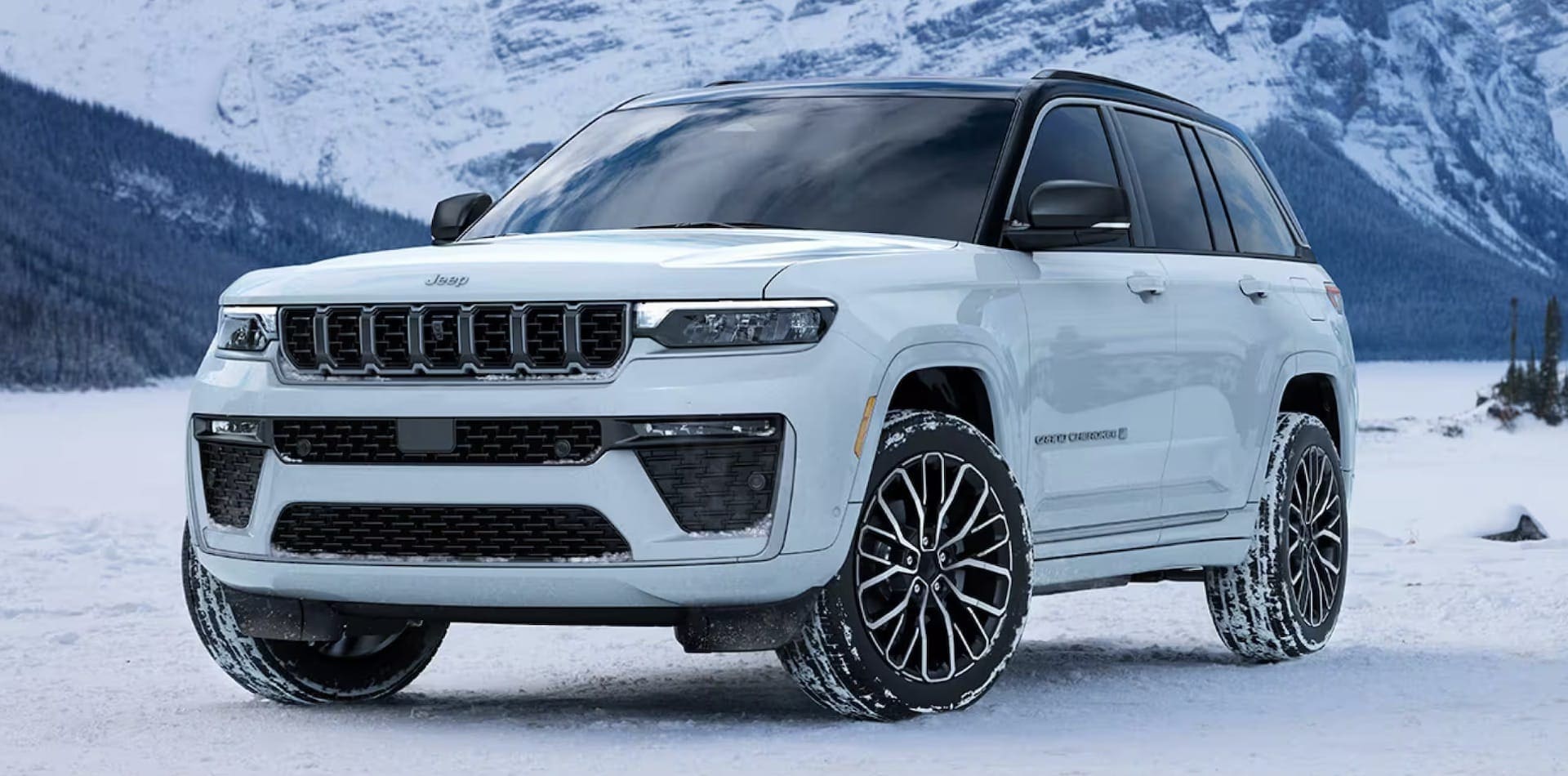
Most people who walk onto our lot asking about a Grand Cherokee already know they want one. The real question is which one: the two-row Grand Cherokee, the stretched Grand Cherokee L with its third row, or the full-size Grand Wagoneer. The honest answer comes down to how many seats you need and whether you tow, because everything else on this list, the four-wheel drive, the ground clearance, the winter competence, is on all three.
We are Premier Cape Cod, at 556 Yarmouth Road in Hyannis, and we sell and service all of them. Below is a plain guide to what driving here actually asks of an SUV, how the three Jeeps answer it, the trade-offs nobody mentions on a spec sheet, and which one we would put you in. When you are ready, the 2026 Grand Cherokee research hub has every detail in one place.
In this guide
What Driving Here Actually Demands
Four things, in our experience. You need traction when a storm leaves the side roads unplowed for a day. You need enough ground clearance and a real four-wheel-drive system if an oversand permit is in your future. You need a tow rating if there is a boat in the driveway. And you need a vehicle that still parks in a village lot in July, which is where a lot of full-size SUVs quietly lose the argument.
Every 2026 Grand Cherokee answers the first two the same way: available four-wheel drive with Quadra-Trac I or the more capable Quadra-Drive II, the five-mode Selec-Terrain system, and 8.4 inches of ground clearance on the two-row. Both engines, the 293-horsepower V6 and the new 324-horsepower Hurricane turbo, tow up to 6,200 pounds properly equipped. The powertrain detail is on the engines and performance page, and the driver-assist and safety rundown is on the technology and safety page.
The Three Jeeps Buyers Cross-Shop
Grand Cherokee (two rows). Seats five, 193.5 inches long, up to 70.8 cubic feet of cargo with the rear seats folded, and the most efficient of the three at up to 23 mpg combined. It starts around $38,920. This is the one that still fits a normal garage. Details on the Grand Cherokee overview and the cargo and dimensions page.
Grand Cherokee L (three rows). The same Jeep stretched to 204.9 inches, with a real third row, seating up to seven, and up to 84.6 cubic feet of cargo. It starts from about $42,920, roughly $2,000 above the matching two-row trim. See the Grand Cherokee L overview and the L cargo and third row page.
Grand Wagoneer (full size). A different animal: body-on-frame, seating up to eight, a 420-horsepower twin-turbo six, and up to 10,000 pounds of towing. It starts around $63,995 and asks for premium fuel. The Grand Cherokee vs Grand Wagoneer comparison lays the two side by side. Trim ladders for the Grand Cherokee family, Laredo through Summit, are on the trims compared guide.
Salt, Sand, and the Bridges
Three local realities worth planning for. First, corrosion. Winter road salt and year-round coastal air are harder on brake hardware and the undercarriage here than almost anywhere inland, so regular underbody washes matter more than the maintenance schedule alone suggests. Our maintenance guide lays out the intervals, and our factory-trained service team knows what the coast does to a Jeep.
Second, sand. Oversand driving at a spot like Sandy Neck requires a seasonal permit, four-wheel drive, and aired-down tires, and access closes in places during shorebird nesting season. A properly equipped Grand Cherokee is capable there; check the town rules before you go. Third, traffic. Summer backs up at the bridges and along Route 132, which is exactly where the turbo's low-end torque and the quieter cabin earn their money on a daily driver.
Honest Trade-offs
The two-row Grand Cherokee has no third row. If you carry more than five people even a few times a year, you will feel it, and no amount of cargo volume fixes a seat count.
The Grand Cherokee L costs about $2,000 more per trim, gives up roughly one mpg to the shorter model, and is nearly a foot longer, which you notice in a tight lot. If the third row is going to sit folded all year, you paid for length you are not using. The Grand Cherokee vs Grand Cherokee L comparison is the honest side-by-side.
The Grand Wagoneer is the most capable and the most expensive by a wide margin, and it drinks premium. Unless you genuinely need eight seats or five-figure towing, it is more truck than the job requires.
The Pick for Local Drivers
Match yourself to a line, then look at the matching builds:
- Family of five or fewer, wants the best mileage and the easiest parking: two-row Grand Cherokee, Limited trim. Shop Grand Cherokee inventory.
- Carpool duty, grandparents, or six-plus a few times a month: Grand Cherokee L. Shop Grand Cherokee L inventory.
- Boat under 6,200 pounds and a beach permit: either one with the Trailer Tow Package; the V6 and the turbo pull the same.
- Eight seats or a big trailer: step up to the Grand Wagoneer and browse new inventory.
Still deciding? The Grand Cherokee FAQ answers the dozen questions we field most.
What It Costs and How to Buy at Premier Cape Cod
The two-row Grand Cherokee runs from around $38,920 to roughly $60,600 for the Summit, and the L from about $42,920 to $62,600, all before the $1,995 destination charge. Most local buyers land on a Limited. Because Jeep adjusts pricing through the year, we keep current numbers on our live inventory rather than a figure that may be stale by the weekend. Every trim is covered on the research hub.
When you are ready, you can get pre-approved online in a few minutes, value your trade, or schedule a test drive. Tell us it is between the two-row and the L and we will park them next to each other so you can sit in both before you decide. Call (508) 815-5000 or schedule a test drive online.
Grand Cherokee Buying FAQs
Which 2026 Grand Cherokee is best for Cape Cod winters?
Any of them with four-wheel drive. Four-wheel drive is standard on the Limited Reserve, Summit and 85th Anniversary Edition and about a $2,000 option below them. Pair it with winter tires and the Selec-Terrain snow mode and the Grand Cherokee is confident on unplowed roads.
Can a Grand Cherokee handle oversand driving at Sandy Neck?
A properly equipped four-wheel-drive Grand Cherokee is capable on permitted oversand routes. You will need a seasonal permit and aired-down tires, and some stretches close during nesting season, so confirm the town rules for the day you plan to go.
Should a local family get the two-row Grand Cherokee or the L?
If you never carry more than five, take the two-row: it costs less, returns about one more mpg and parks easier. If a sixth or seventh seat comes up even monthly, the L is worth the roughly $2,000 per trim and the extra foot of length.
Where can I test drive a Grand Cherokee near Hyannis?
At our showroom on 556 Yarmouth Road. We stock both the Grand Cherokee and the Grand Cherokee L and can line them up side by side. Call (508) 815-5000 or book online.
Find Your Grand Cherokee
See the 2026 Grand Cherokee and Grand Cherokee L in person, or start online.
View Grand Cherokee Inventory