No Plug, No Routine
2026 Jeep Cherokee Hybrid Explained
A turbocharged four, two electric motors and a battery that charges itself, making a combined 210 horsepower and 230 lb-ft, returning 37 MPG combined and more than 500 miles on a tank. Standard on all five trims, with the battery covered for 8 years or 100,000 miles.
Quick Answer
- The 2026 Jeep Cherokee is a self-charging hybrid. It does not plug in and there is no charging routine to learn.
- Three pieces make up the 1.6L I4 Turbo Hybrid: a turbocharged four, two electric motors and a battery. Together they are worth 210 horsepower and 230 lb-ft.
- It is standard on all five trims. There is no gasoline-only Cherokee and no plug-in Cherokee for 2026.
- The published numbers are 39 city, 35 highway and 37 combined MPG, and Jeep turns the 13.7-gallon tank into a claim of more than 500 miles.
- Coverage on the high-voltage lithium-ion battery runs 8 years or 100,000 miles.
Most questions we get on this vehicle are about the hybrid, and almost all of them come down to one worry: whether it asks something of you that a normal SUV does not. It does not. This page explains what the system is, how it behaves, which trims have it, what it means on the roads you actually drive, and what happens at 100,000 miles. A commute that runs stop-and-go for three months and wide open for nine is exactly the duty cycle a self-charging hybrid was built for, because the half of the year that punishes a conventional engine is the half where the electric side does the most work.
The 1.6L I4 Turbo Hybrid Overview
Jeep's propulsion system for the 2026 Cherokee is built from three parts working together: a 1.6-liter turbocharged four-cylinder gasoline engine, two electric motors, and a battery. Together the three make 210 horsepower and 230 lb-ft of torque, and that combined figure is the one that describes the vehicle. That output reaches the road by way of a continuously variable transaxle, then Active Drive I four-wheel drive and its rear-axle disconnect. Neither is optional.
This is one of the first hybrid systems the Jeep brand has fielded, and it is built at Stellantis' Dundee Engine Plant in Michigan while the vehicle itself is assembled at the Toluca Assembly Plant. The result is a Jeep with four-wheel drive as standard equipment that returns 37 MPG combined, which is a combination that did not previously exist in the brand's lineup at this size.
How the Cherokee Hybrid Works
The short version: the car manages the battery, you manage the fuel gauge. Here is what that looks like from the driver's seat.
It charges itself
There is no charge port and no cable. The battery is replenished by the engine and by regenerative braking, which recovers energy every time you lift off or brake instead of throwing it away as heat. Your entire interaction with the hybrid system is putting 87-octane regular in the tank, exactly as you would with any other SUV.
The electric side does the low-speed work
Hybrids of this type earn their fuel economy in traffic, not on the highway, which is why the EPA city figure of 39 MPG is higher than the highway figure of 35. Every stop-and-start cycle is one where the electric motors are doing work the gasoline engine would otherwise do badly. On a peninsula whose summer traffic is measured in stoplights along the Mid-Cape and at the two bridges, that is the half of the year where the difference shows up on the pump receipt.
The turbo four does the highway work
Once you are moving steadily, the gasoline engine carries the load and the system runs closer to a conventional turbocharged four. That is where the 35 MPG highway figure comes from, and combined with the 13.7-gallon tank it is what produces Jeep's quoted range of more than 500 miles on a single fill.
The four-wheel drive is always there
The hybrid system does not replace the four-wheel drive or compromise it. Active Drive I is standard on every trim, and its rear-axle disconnect drops the rear driveline out of the loop when traction does not require it, which is part of how the vehicle reaches its EPA numbers, and re-engages it when it does. Select-Terrain adds Auto, Sport, Snow and Sand/Mud modes on top.
| The system | 2026 Jeep Cherokee |
|---|
| Type | Self-charging hybrid, no plug |
| Components | 1.6L turbocharged four, two electric motors, battery |
| Combined system output | 210 hp and 230 lb-ft |
| Transmission | Continuously variable transaxle |
| EPA city / highway / combined | 39 / 35 / 37 MPG on regular unleaded |
| Tank and range | 13.7 gallons, more than 500 miles per Jeep |
| EPA estimated annual fuel cost | $1,650 |
| Battery coverage | 8 years or 100,000 miles |
EPA estimates per fueleconomy.gov, which lists a single 2026 Cherokee configuration.
The Hybrid Across the Cherokee Trims
This is the shortest availability map in the segment, and it is the reason we put this page in the guide. Base trim, Laredo, Limited, 85th Anniversary Edition, Overland: the 1.6L I4 Turbo Hybrid is in all of them. So is the Active Drive I four-wheel-drive system, and so is the EPA rating.
| Trim | Hybrid powertrain | Four-wheel drive | EPA combined MPG |
|---|
| Cherokee | Standard | Standard | 37 MPG |
| Laredo | Standard | Standard | 37 MPG |
| Limited | Standard | Standard | 37 MPG |
| 85th Anniversary Edition | Standard | Standard | 37 MPG |
| Overland | Standard | Standard | 37 MPG |
Practically, that means the powertrain is never a reason to move up a trim. Pick the trim on equipment and comfort, which is what trims compared is for, and the hybrid comes with whichever one you choose.

Real-World Benefit on a Peninsula
Two conditions here make this powertrain read differently than it would somewhere flat and inland.
The season inverts the duty cycle. From Memorial Day to Labor Day the traffic at the bridges and along the Mid-Cape is stop-and-go, and it is heavy enough that a conventional engine spends the summer idling its way through the worst fuel economy it will see all year. That is precisely the condition a self-charging hybrid is designed for, and it is why the EPA city figure sits above the highway figure. Then the season ends and the same vehicle runs eight months of empty road, where the turbo four takes over and the 500-plus-mile range figure means the trip up Route 3 toward the South Shore and back is not a fuel stop.
Distance is not the same thing as convenience. Getting off Cape means crossing one of two bridges, and a peninsula narrows your options for everything, including where you fill up on a February Sunday. A 13.7-gallon tank at 37 MPG combined turns that into a non-issue: a weekend that includes a camping run out to Nickerson State Park, a return trip to Nickerson State Park in the same week, a couple of runs into town and the drive back over the canal does not put you near the bottom of the gauge.
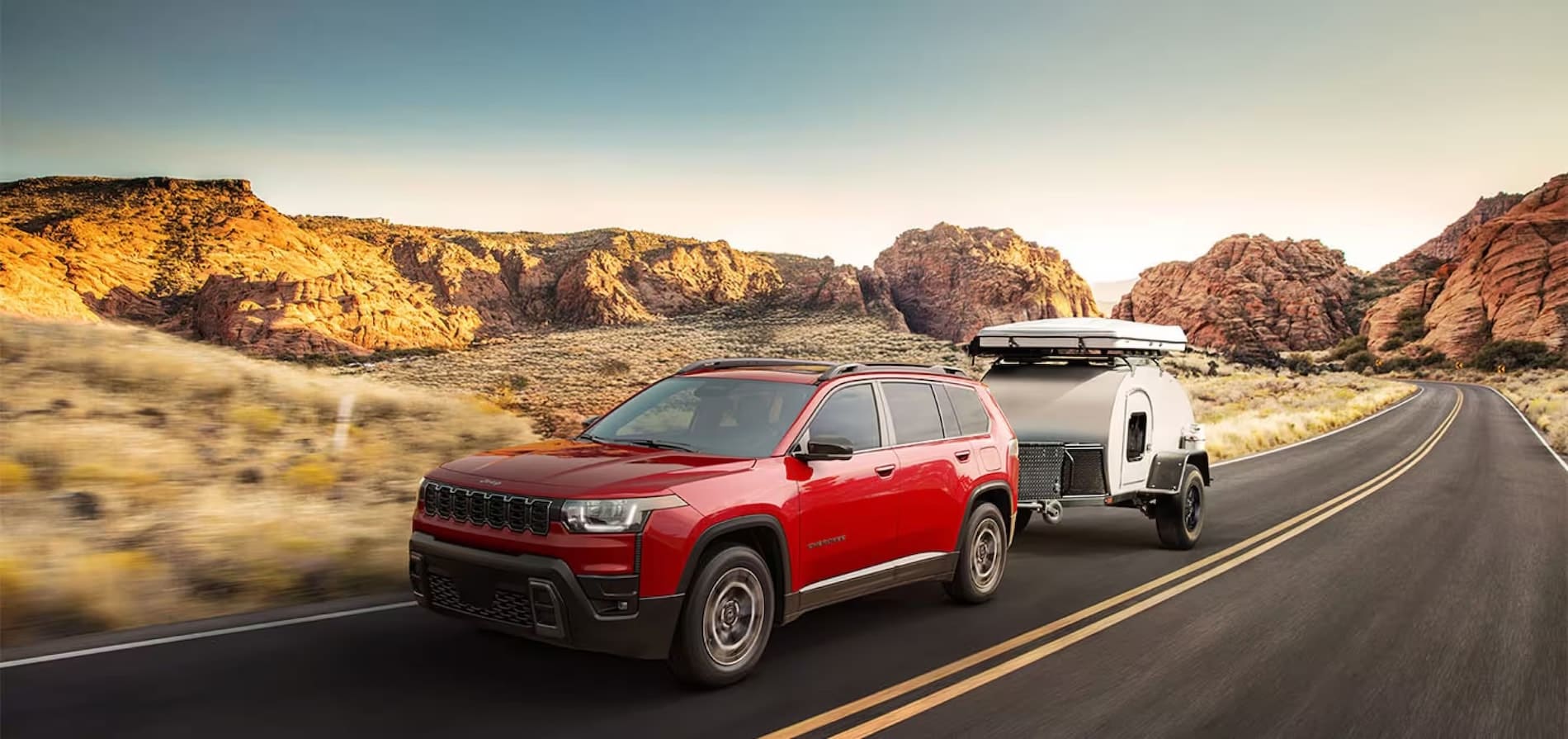
And the hardware you would expect from the badge is untouched by any of it. Standard four-wheel drive, a Snow mode, 8.0 inches of ground clearance and a 3,500-pound tow rating on a conventional hitch, properly equipped, all coexist with the 37 MPG figure rather than trading against it.
Owning the Hybrid: Coverage and Service
The question every hybrid shopper asks before the second test drive is what happens to the battery, and the answer is a specific term rather than a reassurance: the high-voltage lithium-ion battery is covered for 8 years or 100,000 miles. Around it sit 3 years or 36,000 miles of basic coverage, 5 years or 60,000 miles on the powertrain, and 5 years or 60,000 miles of 24-hour roadside assistance.
Routine service is not exotic. The oil change interval is called by the vehicle's own oil change indicator rather than a fixed mileage, the engine takes a full-synthetic 0W-20, and the scheduled-maintenance chart does not begin until 20,000 miles or two years. The one hybrid-specific item on that chart is the long-life coolant, which serves the engine, the intercooler, the battery and the power electronics together and is replaced at 10 years or 150,000 miles. The full chart is on Cherokee maintenance.
See the Cherokee Hybrid at Premier Cape Cod
We are at 556 Yarmouth Rd in Hyannis, off Route 132 — an easy run down Route 3 from Plymouth and over the bridge. Barnstable drivers have the shortest trip of anyone on Cape Cod, and Falmouth is a straight run up. Barnstable is where the car will spend most of its life. A Falmouth commute and a Plymouth run back over the bridge are the exact mix this drivetrain was built around. The honest recommendation on this vehicle is to drive it before you read another spec sheet, because the thing people are actually deciding is whether a hybrid feels like a compromise, and five minutes settles it in a way no table can. Take it out into Hyannis traffic and then onto the highway, and watch what the instrument cluster does in each.
Call (508) 815-5000, book a test drive, get pre-approved, or see what is in stock.
Cherokee Hybrid FAQs
Do you have to plug in a 2026 Jeep Cherokee?
No. The Cherokee is a self-charging hybrid with no charge port. The battery is replenished by the engine and by regenerative braking, so the only thing you add is regular unleaded fuel.
Is there a gas-only 2026 Cherokee?
The 1.6L I4 Turbo Hybrid is the powertrain for the 2026 Cherokee and it is standard on all five trims, including the $36,995 one. Choosing a trim never changes what is under the hood, which also means the fuel economy and the tow rating are the same wherever you land.
How long is the hybrid battery warranty?
The high-voltage lithium-ion battery is warranted to eight years or 100,000 miles, whichever arrives first. Basic coverage runs 3 years or 36,000 miles and powertrain coverage 5 years or 60,000 miles, with roadside assistance for 5 years or 60,000 miles.
Why is the city MPG higher than the highway MPG?
That is the signature of this kind of hybrid. Stop-and-go driving lets the electric motors do work the gasoline engine would do inefficiently, and braking puts energy back into the battery. EPA rates the Cherokee at 39 city against 35 highway, which means summer traffic costs you less here than it would in a conventional SUV.
Does the hybrid system reduce the Cherokee's capability?
Active Drive I four-wheel drive with a rear-axle disconnect is standard on every trim, ground clearance is 8.0 inches, Select-Terrain offers Auto, Sport, Snow and Sand/Mud modes, and the vehicle is rated to tow up to 3,500 pounds on a conventional hitch when properly equipped. The hybrid sits alongside all of it.
What fuel does the Cherokee hybrid take?
It drinks regular unleaded at 87 octane on the R+M/2 method, and tolerates ethanol to 15 percent. The owner's manual notes that 91 octane or higher lets the engine reach optimal performance, most noticeably in hot weather or under heavy load such as towing, but it is not required.
How far can it go on a tank?
It covers more than 500 miles of driving range on a single tank, from 13.7 gallons at an EPA combined rating of 37 MPG. The EPA's own estimated annual fuel cost for the vehicle is $1,650.
Drive the Hybrid and Stop Wondering
Traffic first, then the highway. The instrument cluster tells the whole story.