Space and Seating
2026 Jeep Grand Wagoneer Cargo and Third Row
27.9 cubic feet behind three rows, 116.7 with the rear two folded, and a third row that seats adults in either body. The third row and the cargo floor compete for the same space, and this page is about that trade.
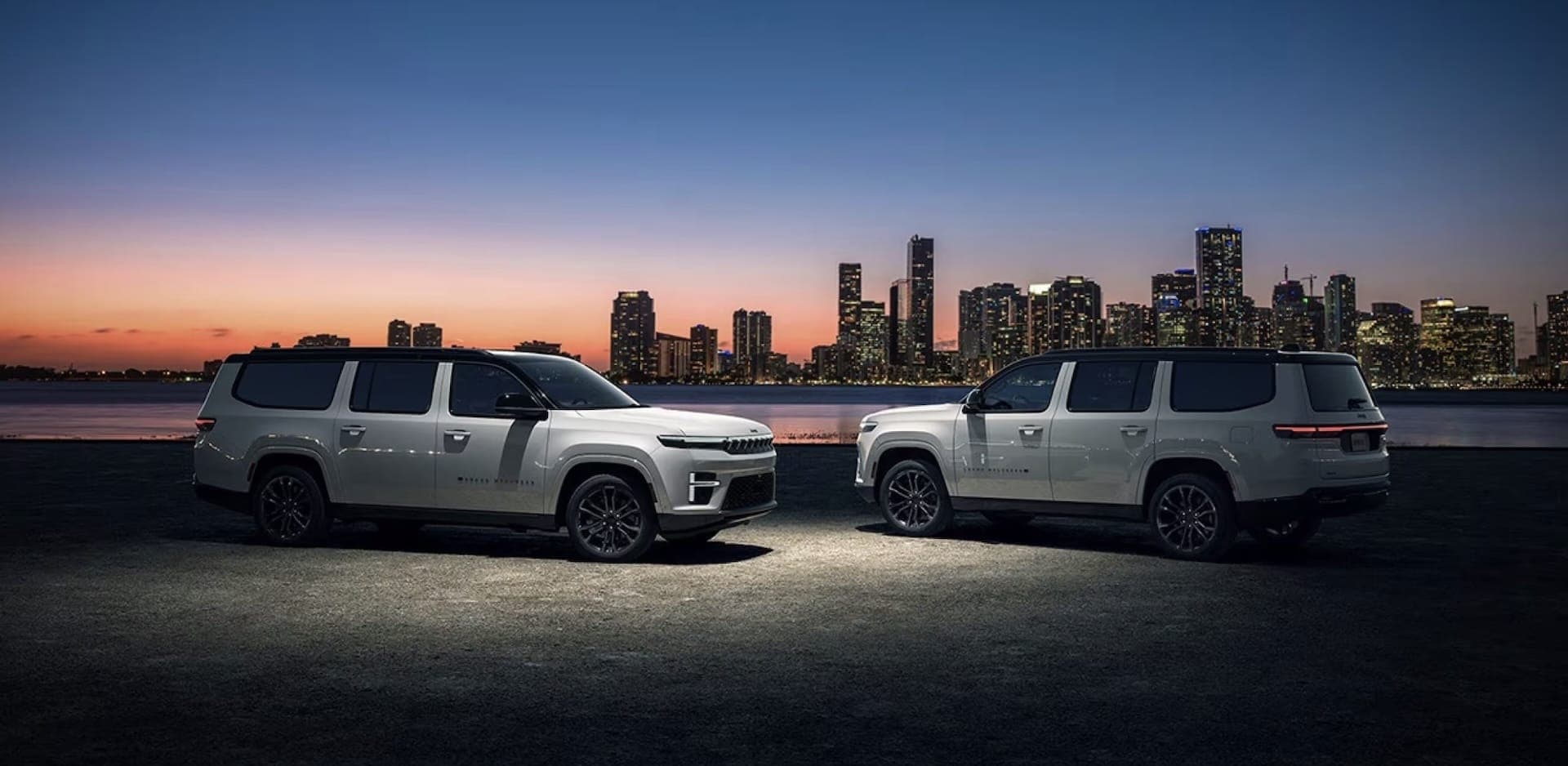
A three-row SUV has one interior and two jobs, and it can only do both at once up to a point. In the 2026 Grand Wagoneer that point is measurable: with all three rows in use you have 27.9 cubic feet behind the last one. Fold that row and the number becomes 70.8. Fold the second as well and it reaches 116.7 cubic feet, which is the most the short-wheelbase body holds. Every one of those figures is the same vehicle. What changes is how many people are riding in it.
That is the decision that actually costs money. If you regularly need seven seats and a full load of gear at the same time, the answer is the long-wheelbase Grand Wagoneer L and a flat $3,000. If you need seven seats on some trips and cargo on others, the standard body already does it. Below: the volumes by configuration, what the third row is actually like to sit in, how the seats fold and what the load area gives you, and what actually fits.
Cargo Volume and Configurations
| Seats in use | Grand Wagoneer | Grand Wagoneer L |
|---|
| All three rows up | 27.9 cu ft | 42.6 cu ft |
| Third row folded, five seats | 70.8 cu ft | See the note below |
| Both rear rows folded, two seats | 116.7 cu ft | See the note below |
| Total passenger plus cargo volume | 210.3 cu ft | 225.1 cu ft |
Two things about that table. The first is the L's blank cells: for 2026 Jeep splits only the behind-third-row measurement between the two bodies, and this page carries the short wheelbase's other two figures rather than reproducing numbers that belong to a previous generation. If you need the L's seats-folded volume for a specific load, call us and we will measure the vehicle itself rather than quote you something we cannot stand behind.
The second is what 116.7 cubic feet actually describes. Jeep measures it behind the first row, meaning both rear rows folded and the vehicle carrying two people. There is no separate "maximum cargo" line on the specification, because that is the maximum. It is a large number for the class, and it is also a two-seat configuration, so treat it as the moving-day figure rather than the family-holiday one.
The gap that matters most is the first row of that table. Choosing the L moves that space from 27.9 to 42.6 cubic feet behind an occupied third row, which is the difference between a school run with a week's luggage and a school run with a week's luggage plus the dog.
Interior Dimensions by Row
Before the table, the single most useful fact on this page: none of these measurements change between the Grand Wagoneer and the Grand Wagoneer L. Not one. The L's extra seven inches of wheelbase went entirely behind the third row, into cargo. If you are considering the longer body because someone complained about the back seat, it will not fix that.
| Measurement | Front | Second row | Third row |
|---|
| Legroom | 40.9 in | 42.7 in | 36.6 in |
| Headroom, no sunroof | 41.3 in | 40.0 in | 39.0 in |
| Headroom with sunroof | 39.3 in | 38.4 in | 38.5 in |
| Shoulder room | 66.1 in | 65.2 in | 64.4 in |
| Hip room | 63.5 in | 63.0 in | 51.6 in |
| Knee clearance | 8.1 in of seat travel | 6.7 in | 1.9 in |
Read the last row against the first. Third-row legroom of 36.6 inches is generous, and 64.4 inches of shoulder room back there is close to what the second row offers. Knee clearance of 1.9 inches is the honest counterweight: there is room for your legs but not much space between your knees and the seatback ahead. In practice that means adults are comfortable on a run to the Hyannis ferry terminals and would rather not spend four hours there, which is a normal answer for a third row and a better one than most rivals give.
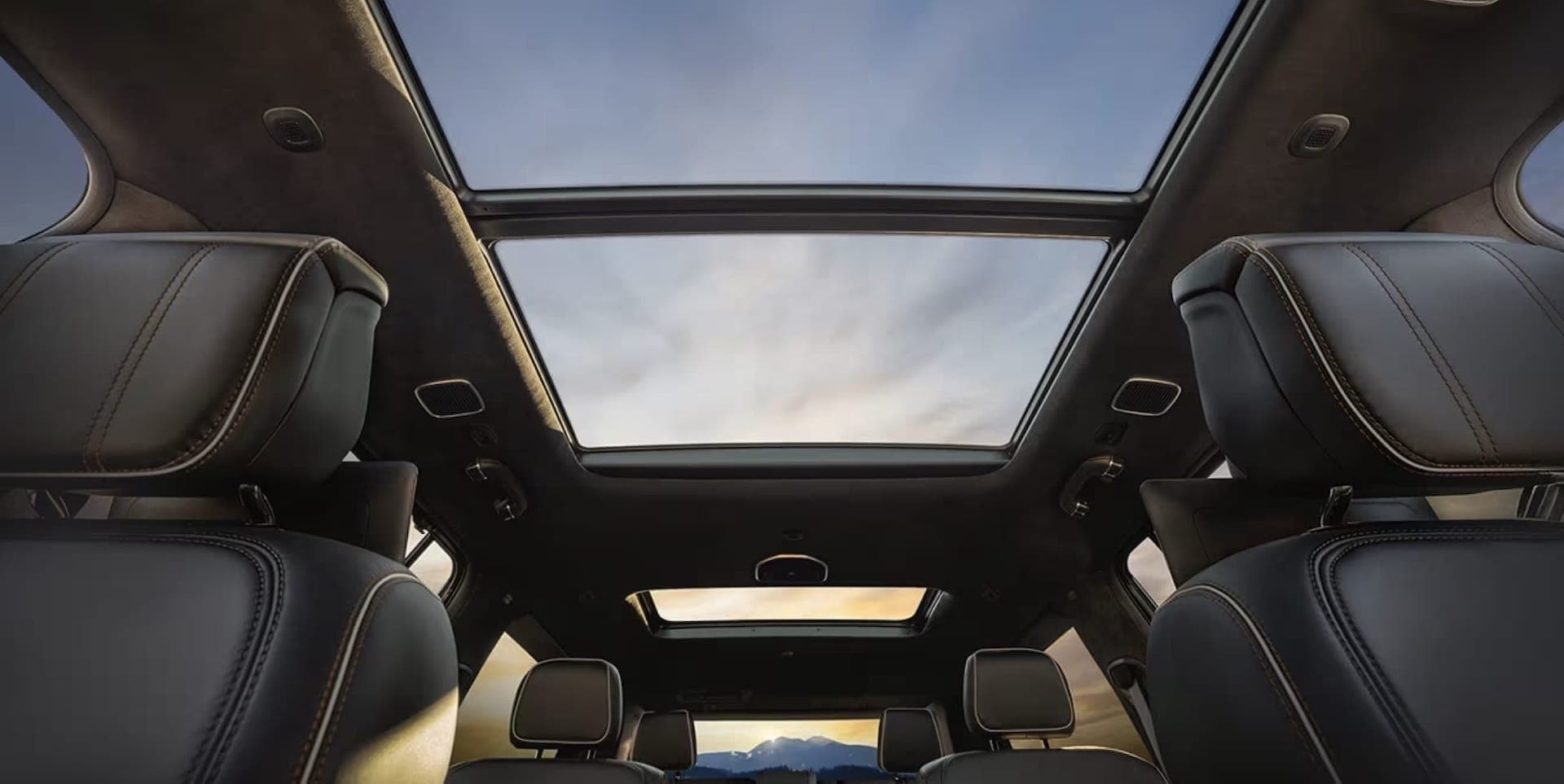
Total interior passenger volume is 182.4 cubic feet. If the sunroof is on your list, note that it costs headroom at every row, and the full row-by-row comparison sits on the specifications page.
Seating Configurations and Flexibility
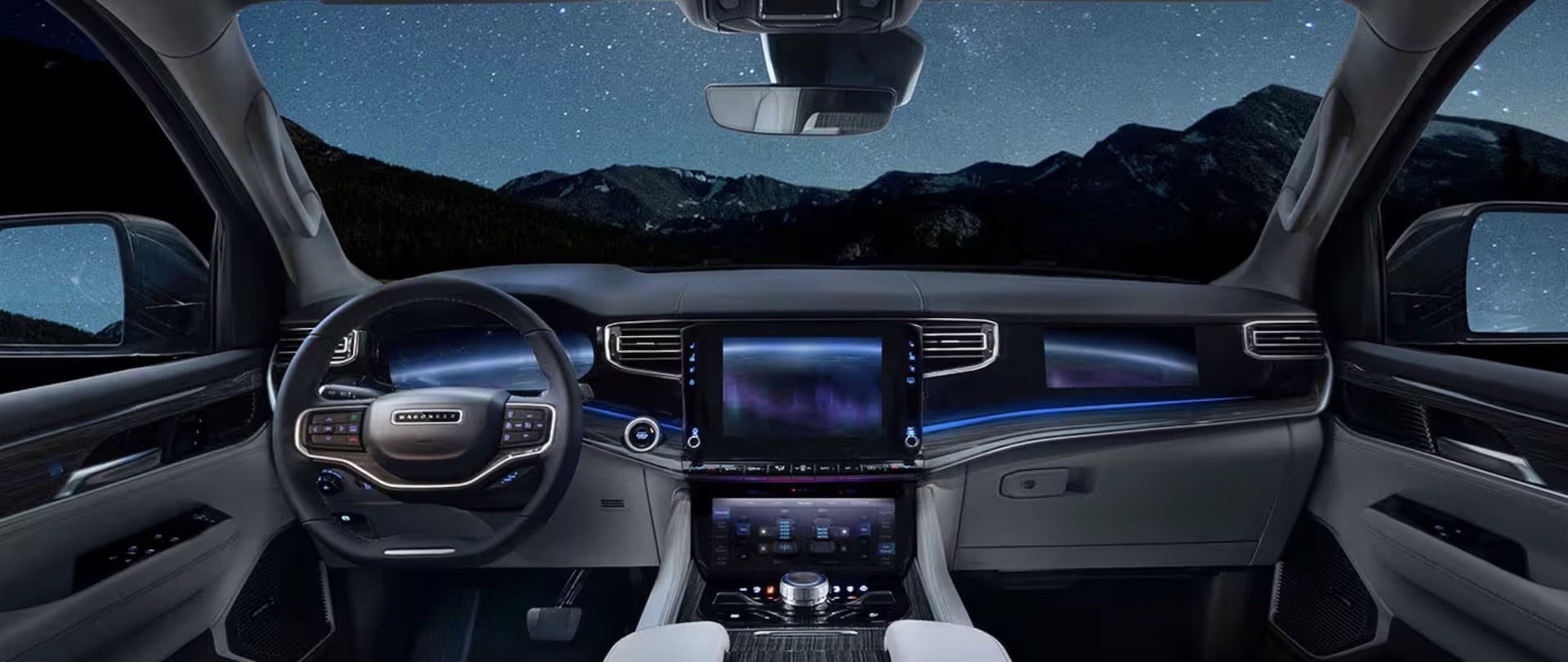
Seven seats is the standard arrangement, laid out two in front, two captain's chairs in the middle and three across the back. Eight is available, and the change is entirely in the second row: a bench replaces the captain's chairs. That choice is open on every configuration and in both bodies, so it is independent of everything else you are deciding.
| Layout | Second row | Suits |
|---|
| Seven seats, standard | Two captain's chairs | Households where the third row is used often and someone has to climb past the second |
| Eight seats, available | Three-place bench | Households that need the eighth belt more often than they need easy access |
Our advice runs against the instinct here. The eighth seat looks like free capacity, but the captain's chairs create a walk-through gap to the third row, and on a vehicle where the third row is in daily use that gap is worth more than the extra belt. Count how many times a year you will carry eight people. If the honest answer is two or three, take the chairs and put the two extra passengers in a second car on those days.
Heated second-row seats arrive from the Limited trim upward, which is the equipment most families notice on a February morning, and the trims page covers where that lands in the range.
Cargo Features and Accessibility
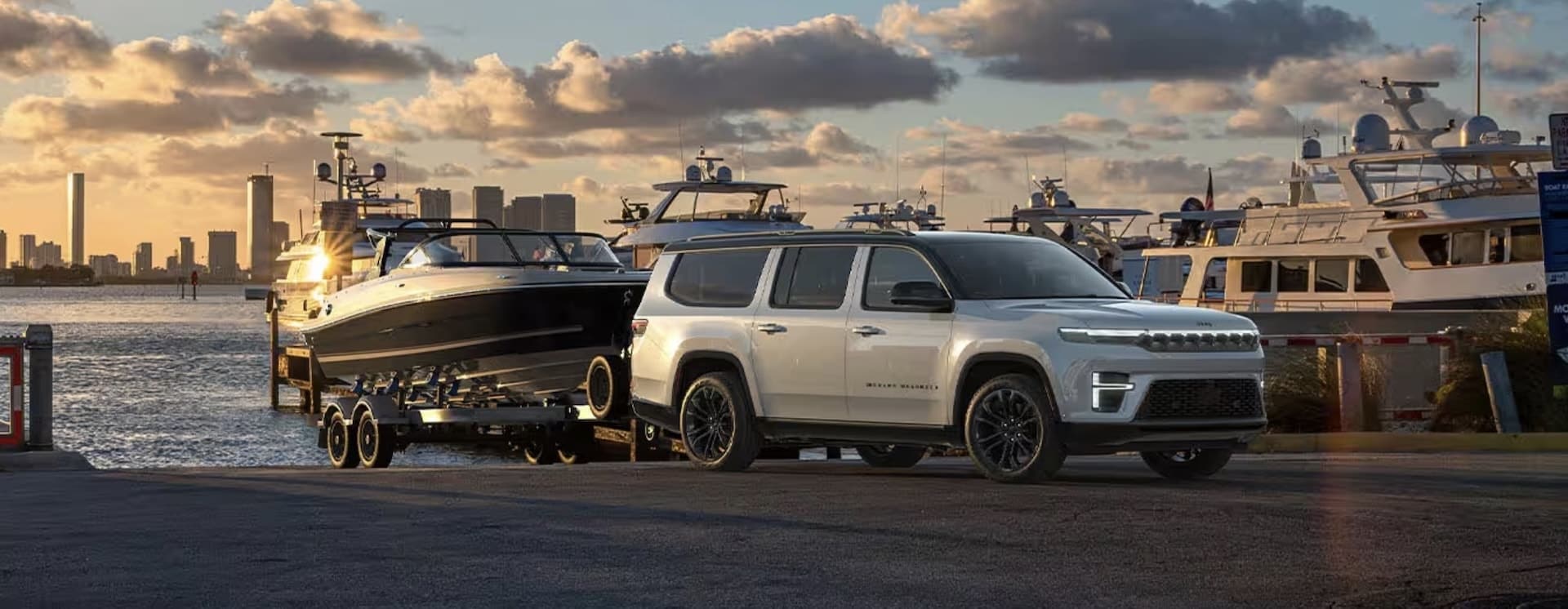
Every configuration gets the power liftgate, and it opens hands-free. That reads as a convenience feature until you are standing behind the vehicle holding a cooler in one arm and a folding chair in the other.
The load height is where the air suspension earns a mention outside the off-road context. Load floor height is 34.0 inches on the standard suspension, and the same on air suspension at normal ride height. Park a vehicle fitted with Quadra-Lift air suspension and it kneels to 32.5 inches. Sill step height follows the same pattern, 22.9 inches normally and 21.3 inches lowered. An inch and a half does not sound like much until you are sliding something heavy over the lip instead of lifting it.
| Load floor height | 34.0 in standard, and on air suspension at normal ride height; 32.5 in with air suspension in Park |
| Sill step height | 22.9 in standard; 21.3 in with air suspension in Park |
| Liftgate | Hands-free power liftgate, standard on every configuration |
| Roof | Adjustable roof rail crossbars, included in the Heavy-duty Trailer Tow package and in the Summit Obsidian Appearance Package |
On the roof: adjustable crossbars come inside two packages rather than as a standalone option, so if a rooftop box is part of your plan, that is a build-time decision. Jeep publishes no roof load rating for this vehicle, and figures circulating on accessory sites do not trace to a Jeep document, so we will not quote one. Bring us the box you intend to carry and we will check it against the owner's manual for the specific vehicle.
What Fits in the 2026 Grand Wagoneer?
Volume figures are abstract until they meet real objects, so here is the translation, with the caveat that load shapes vary and the only definitive test is putting your own gear in the back of ours.
| The situation | What you are working with |
|---|
| Seven aboard, everyone with a bag | 27.9 cu ft in the standard body. Soft bags yes, hard suitcases for seven no. This is the case that argues for the L and its 42.6 |
| Five aboard, weekend away | 70.8 cu ft with the third row folded. Comfortable for luggage, a cooler and beach equipment together |
| Two aboard, hauling something bulky | 116.7 cu ft with both rear rows down, and a 34.0-inch load floor that drops to 32.5 with air suspension |
| Third row occupied by adults | 36.6 in of legroom and 39.0 in of headroom, or 38.5 with the sunroof. Fine for an hour, tight on knee clearance at 1.9 in |
| Everything at once, plus a trailer | Watch payload, not volume: 1,415 to 1,625 pounds depending on configuration, covering people, cargo and tongue weight together |
That last row is the one people miss. Volume runs out slowly; payload runs out suddenly. Payload runs from 1,415 to 1,625 pounds depending on how the vehicle is built, and seven adults plus luggage consume most of it before a trailer tongue enters the calculation, because tongue weight counts against that same number. If you are loading heavily and towing on the same trip, the arithmetic to check is weight rather than space. Ratings by configuration are on the towing capacity page.
Loading a Cape Cod Weekend
Two loads make this decision for most households here, and they pull in opposite directions.
The first is the ferry run out of Hyannis Harbor. Bags for a family headed to the islands go in hard-sided, they go in for a week, and everyone is coming. That is seven seats occupied and luggage that will not compress, which is the exact case 27.9 cubic feet struggles with and 42.6 handles. If your summer contains several of those, the Grand Wagoneer L is the $3,000 that solves an annual argument.
The second is the beach day, and it argues the other way. Chairs, umbrella, cooler, boards and towels are bulky but light, and they usually travel with four or five people rather than seven. Fold the third row, use 70.8 cubic feet, and the standard body is not merely adequate but generous. Add a day of sand and salt to that and the practical question shifts from volume to what the load area survives, which is a case for rubber mats regardless of which body you choose.
Households running down from Dartmouth and the South Coast tend to describe the first pattern; families already on Cape Cod more often describe the second. Neither is wrong. Count which one happens more in your year and buy the body that matches it.
One more Cape Cod variable that belongs in a cargo discussion: everything you load in summer comes back with sand in it, and everything you load in winter comes back with salt on it. A hands-free liftgate and a low load floor are conveniences the rest of the year and genuine time-savers on a Craigville Beach afternoon. We keep all-weather cargo mats on the shelf at our Hyannis store for exactly that reason, and we would rather fit them at delivery than sell them to you in September.
Cargo and Interior FAQs
Do I need the third row or the longer body?
Both bodies have three rows, so this is not the choice it sounds like. Every Grand Wagoneer and Grand Wagoneer L seats seven as standard, or eight with the bench. What the L adds is space behind that third row: 42.6 cubic feet against 27.9. Buy the L if you routinely fill the seats and the cargo floor on the same trip.
How much cargo room does the Grand Wagoneer L actually add?
It takes the space behind the third row from 27.9 cubic feet to 42.6. That is the measurement Jeep splits between the two bodies for 2026, and it is where the L's extra seven inches of wheelbase went. It costs a flat $3,000 at every configuration, and it does not add legroom anywhere.
What is the maximum cargo volume, and how is it measured?
116.7 cubic feet in the short-wheelbase Grand Wagoneer, measured behind the first row with both rear rows folded. Jeep publishes no line labelled maximum cargo volume, because behind-the-first-row is that figure. Read it as a two-seat configuration.
Is the eight-passenger bench worth losing the captain's chairs?
Only if the eighth belt will earn its place regularly. The captain's chairs leave a walk-through gap to the third row, which makes daily loading of children considerably easier and is the reason seven-seat layouts are standard here. The bench is available on every configuration and in both bodies if you need it.
How low is the tailgate for loading heavy items?
Expect 34.0 inches from the ground to the cargo floor on coil springs. Specify Quadra-Lift air suspension and the vehicle settles in Park, bringing that down to 32.5 inches while the sill drops from 22.9 to 21.3. Anyone who loads something heavy on a regular basis has just found an argument for air springs that has nothing to do with ride quality.
Can the roof carry a cargo box?
Adjustable roof rail crossbars are available, arriving inside the Heavy-duty Trailer Tow package or the Summit Obsidian Appearance Package rather than as a standalone item, so specify them when the vehicle is ordered. On capacity, we would rather help you check the owner's manual for your specific vehicle than repeat a figure from an accessory listing.
Does carrying a full load cut into towing?
Yes, through payload rather than through the tow rating itself. Payload varies by configuration, from 1,415 to 1,625 pounds, and it counts driver, passengers, cargo and trailer tongue weight together. A fully loaded vehicle towing near its limit can run out of payload before it runs out of tow rating.
Does the panoramic sunroof affect the third row?
It takes half an inch of headroom there, from 39.0 inches to 38.5, and the third pane of glass sits directly over those seats. Most passengers judge the light worth the half inch, but if your third row regularly carries tall adults, sit in one fitted with the roof before ordering it.
Load It Before You Buy It
Bring the car seats, the stroller, the cooler and the tallest person in the household. Twenty minutes in our lot settles what a cubic-foot figure cannot.