Head to Head
2026 Jeep Grand Wagoneer vs Chevrolet Suburban
The Jeep tows 10,000 lbs properly equipped against the Suburban's 8,200. The Chevrolet holds far more cargo, offers hands-free driving and a diesel that returns 23 mpg combined. These two are less alike than the price tags suggest.
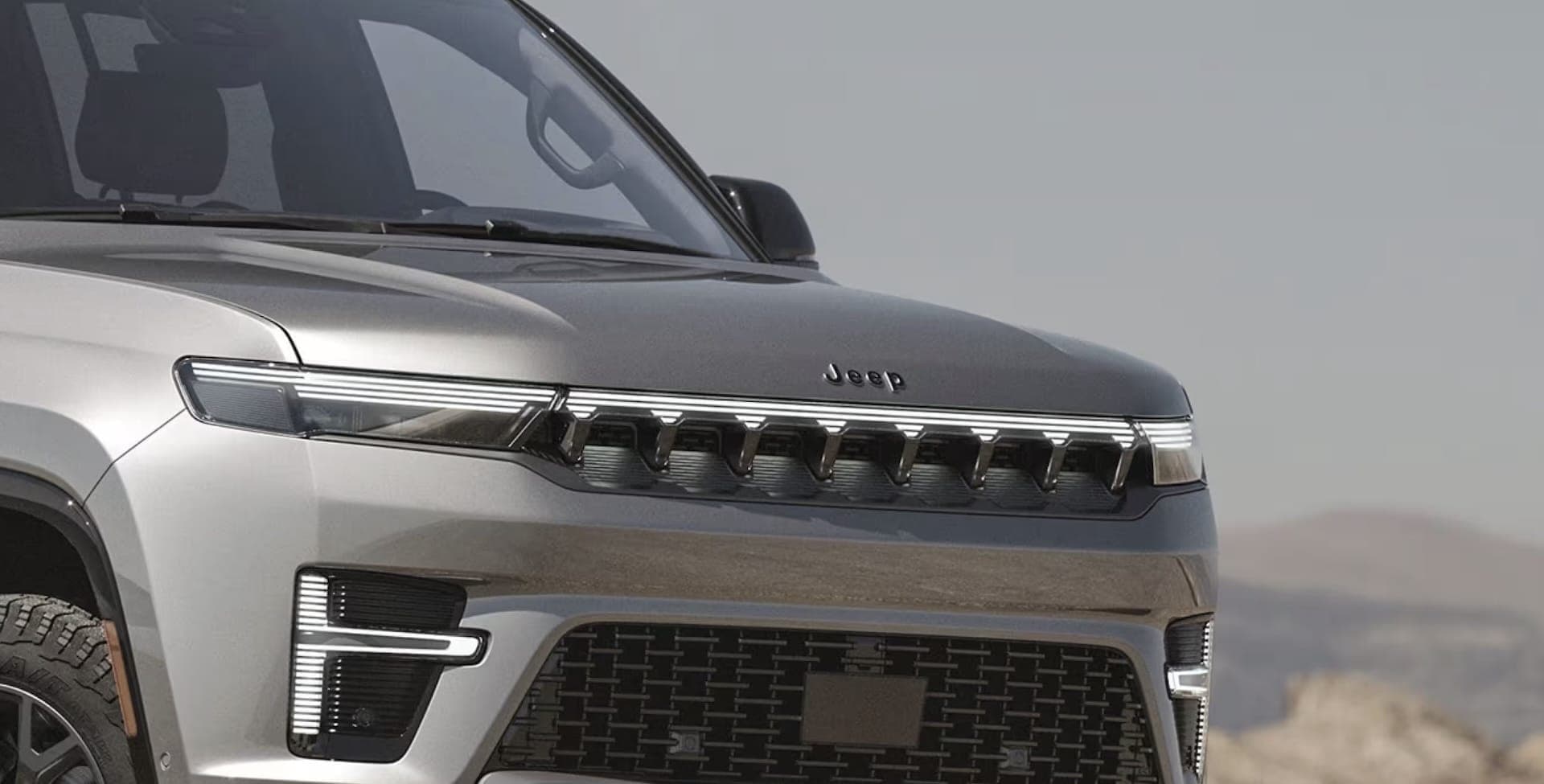
These two open within a few hundred dollars of each other and then diverge sharply. The Suburban is a cargo vehicle first, built on one long wheelbase with three engines to choose between including a diesel. The Grand Wagoneer is a towing and comfort vehicle with one engine and two body lengths. Deciding between them is mostly a question of which of those two jobs you are actually buying for.
Quick take. Buy the Grand Wagoneer if towing decides it. Properly equipped on a conventional hitch, the 4x4 short-wheelbase Jeep is rated 10,000 lbs against a maximum of 8,200 lbs for the Suburban, properly equipped, and the Chevrolet's figure requires its rear-drive 5.3L V8 rather than the trim most people buy. The Jeep also matches the Suburban's most powerful V8 for horsepower while running on regular fuel rather than premium.
Buy the Suburban if space, hands-free driving or fuel economy decide it. It holds 93.8 cubic feet behind the second row against 70.8, carries more payload, offers Super Cruise hands-free driving that Jeep does not answer, and its Duramax diesel returns 21 city / 26 highway / 23 combined against the Jeep's best of 17 / 24 / 19.
2026 Grand Wagoneer vs Suburban Overview
| | 2026 Jeep Grand Wagoneer | 2026 Chevrolet Suburban |
|---|
| Starting MSRP | $63,995 | $63,700, LS 2WD |
| Destination charge | $2,795 | $2,795 |
| Engines | One: 3.0L Hurricane Twin Turbo inline-six | Three: 5.3L V8, 6.2L V8, 3.0L Duramax turbo-diesel inline-six |
| Horsepower | 420 hp | 355 hp (5.3L) · 420 hp (6.2L) · 305 hp (Duramax) |
| Torque | 468 lb-ft | 383 lb-ft (5.3L) · 460 lb-ft (6.2L) · 495 lb-ft (Duramax) |
| Fuel required | 89 recommended, 87 acceptable | Regular (5.3L) · Premium (6.2L) · Diesel (Duramax) |
| Maximum towing | 10,000 lbs, 4x4 short wheelbase, 3.92 axle, conventional hitch, properly equipped | 8,200 lbs, 5.3L V8 rear-wheel drive, properly equipped |
| Cargo behind third row | 27.9 cu ft, or 42.6 as the Grand Wagoneer L | 41.5 cu ft |
| Cargo behind second row | 70.8 cu ft, short wheelbase | 93.8 cu ft |
| Maximum cargo | 116.7 cu ft, short wheelbase | 144.5 cu ft |
| Third-row legroom | 36.6 in | 36.7 in |
| Hands-free driving | Not offered | Super Cruise available, including hands-free towing support |
| Best EPA combined | 19 mpg | 23 mpg, Duramax 2WD |
| Overall length | 216.1 in, or 228.1 as the L | 226.3 in |
| Seating | Seven standard, eight available | Eight standard; seven or nine available, nine on LS only |
One structural difference worth holding onto while you read the rest: the Suburban comes in a single long body, while the Grand Wagoneer comes in two. Comparing the Suburban against the short-wheelbase Jeep flatters the Chevrolet on cargo, and comparing it against the Grand Wagoneer L is the fairer test. Both comparisons appear below, labelled.
Powertrain and Towing
Chevrolet gives you three engines and Jeep gives you one, which sounds like a Chevrolet advantage until you look at what each does. The 5.3L V8 that comes on most Suburbans makes 355 hp and 383 lb-ft, well short of the Jeep's 420 hp and 468 lb-ft. Step up to the 6.2L V8 and horsepower matches the Jeep exactly at 420, with 460 lb-ft, but that engine requires premium fuel while the Grand Wagoneer's Hurricane recommends mid-grade 89 and accepts regular 87.
The Duramax 3.0L turbo-diesel is the one that changes the argument. At 305 hp it is the least powerful of the three, but 495 lb-ft is the most torque in this comparison and it delivers fuel economy neither gasoline vehicle approaches. High annual mileage makes it a serious argument for the Chevrolet.
Towing is where the Jeep separates decisively, and the detail matters. The Suburban's maximum of 8,200 lbs is achieved by the rear-wheel-drive 5.3L V8, not by the more expensive engines: the 5.3L in four-wheel drive is rated 8,000 lbs and the 6.2L V8 in four-wheel drive drops to 7,900. The Grand Wagoneer, properly equipped with four-wheel drive and the 3.92 axle on the short wheelbase, is rated 10,000 lbs on a conventional hitch. Set that against the Suburban's four-wheel-drive 5.3L figure of 8,000 lbs, properly equipped, and the like-for-like gap runs 2,000 lbs in the Jeep's favor.
Payload runs the other way. The Suburban's 5.3L four-wheel-drive configuration carries 1,759 pounds against 1,560 pounds for a four-wheel-drive short-wheelbase Grand Wagoneer, so the Chevrolet leads, though by less than the headline trims suggest. Our towing capacity page explains why payload often binds before the tow rating does.
On fuel, the gasoline comparison favors the Jeep: 17 city / 24 highway / 19 combined in rear-drive short-wheelbase form against 15 / 20 / 17 for the 5.3L Suburban in two-wheel drive. The diesel changes the picture completely at 21 / 26 / 23. All figures are published at fueleconomy.gov.
Space and Cargo, Compared Properly
This is the Suburban's strongest section, and it deserves the honest version rather than a flattering one.
Against the short-wheelbase Grand Wagoneer, the Suburban wins everywhere: 41.5 cubic feet behind the third row against 27.9, 93.8 behind the second against 70.8, and 144.5 maximum against 116.7. If you are cross-shopping a standard Grand Wagoneer against a Suburban purely on space, the Chevrolet is the larger vehicle and it is not close.
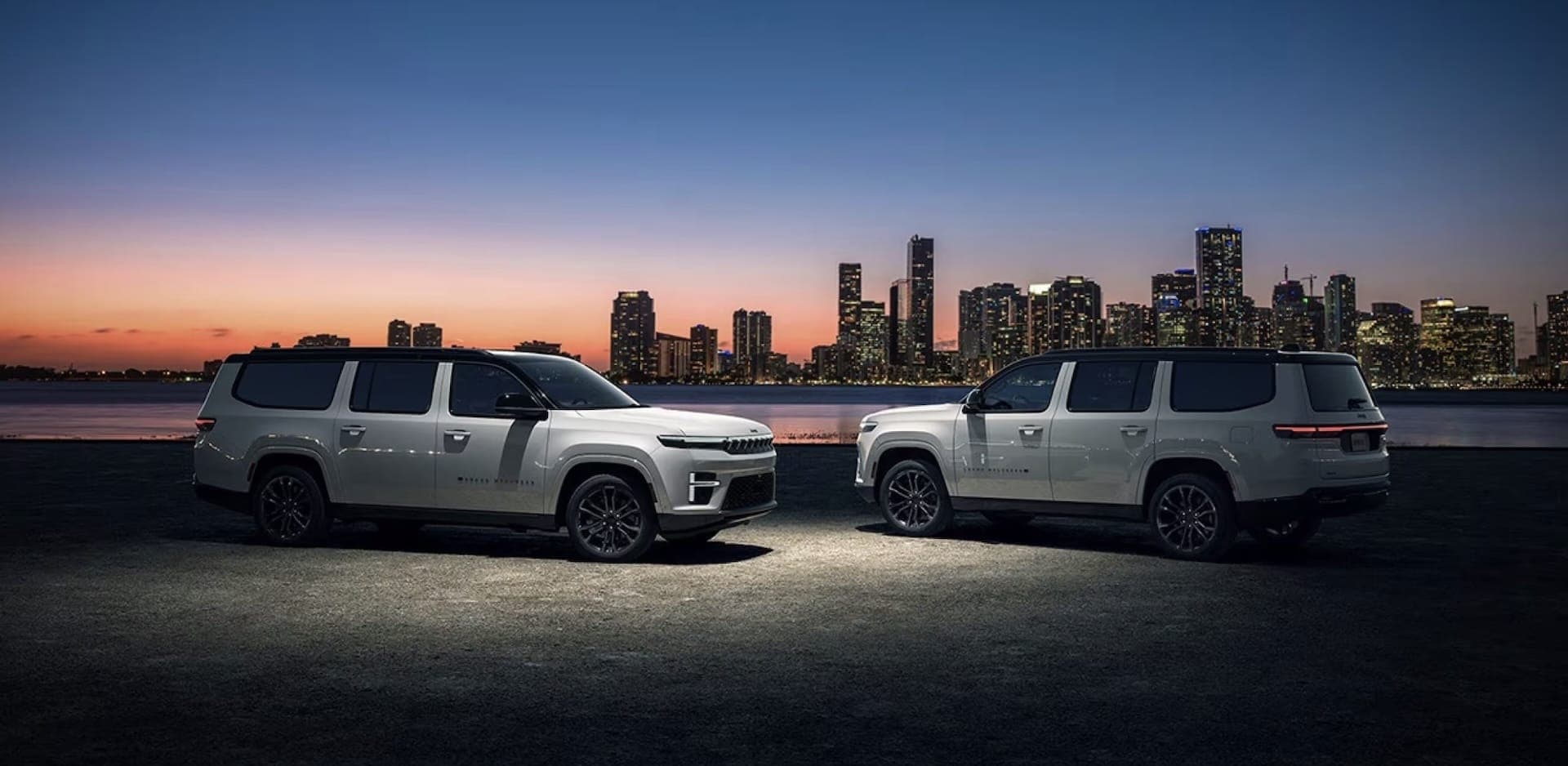
Against the Grand Wagoneer L, the one measurement Jeep publishes for the long body actually goes the other way: 42.6 cubic feet behind the third row against the Suburban's 41.5. Jeep does not publish behind-second-row or maximum figures for the L for 2026, so those two comparisons cannot be made honestly and are not attempted here. What can be said is that with all three rows occupied, which is how a family of seven actually travels, the Grand Wagoneer L holds slightly more than a Suburban.
Third-row legroom is a dead heat, 36.7 inches in the Chevrolet against 36.6 in the Jeep. Seating counts differ in a way worth checking against your household: the Suburban seats eight as standard with seven or nine available, though the nine-passenger arrangement is limited to the LS. The Grand Wagoneer seats seven as standard with eight available.
Hands-Free Driving and Cabin Technology
As with the Ford comparison, this is a capability gap the Jeep does not close. Super Cruise permits hands-free driving on compatible roads and supports hands-free towing, which is an unusual and useful combination for anyone pulling a trailer on the highway. Chevrolet lists it on the LT, RST, Premier and High Country.
The Grand Wagoneer's Active Driving Assist is standard on all seven configurations, and Jeep is precise about what it is: a hands-on-wheel, eyes-on-road system that handles lane centering, speed and braking while expecting supervision throughout. No Grand Wagoneer offers hands-free operation at any price.
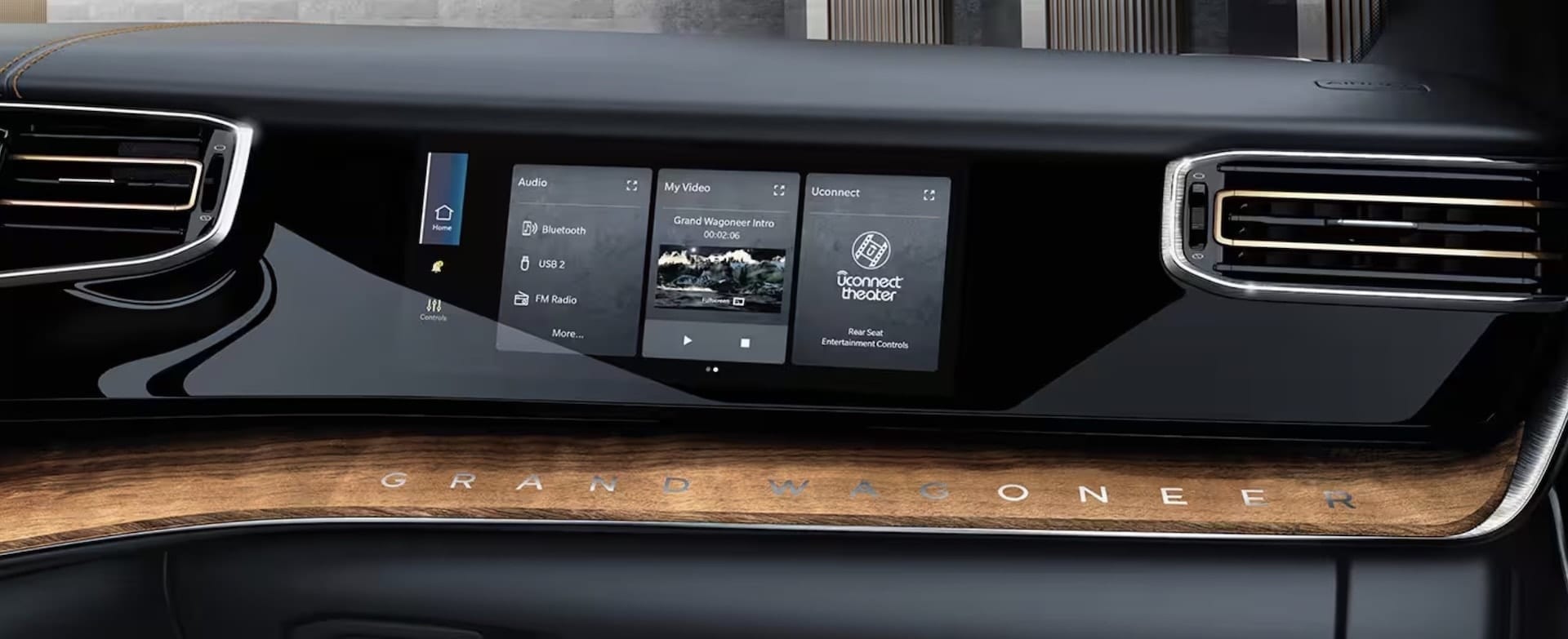
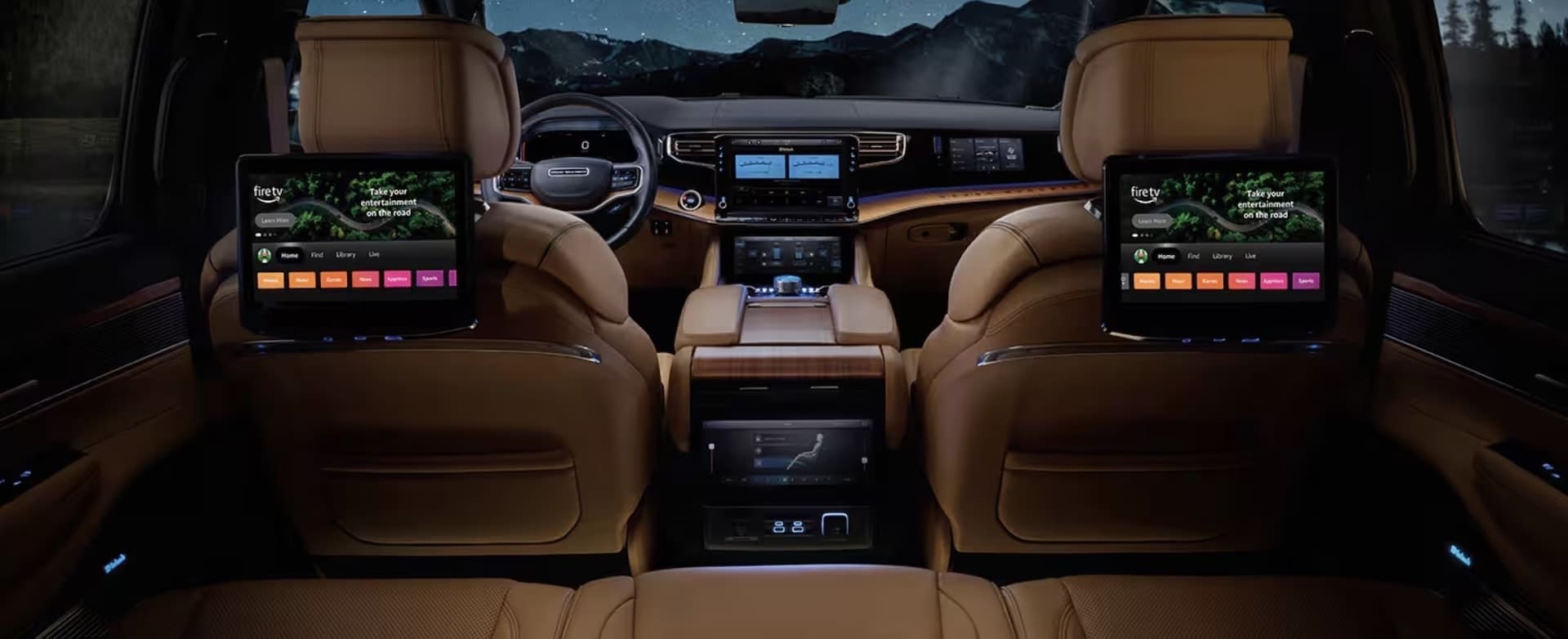
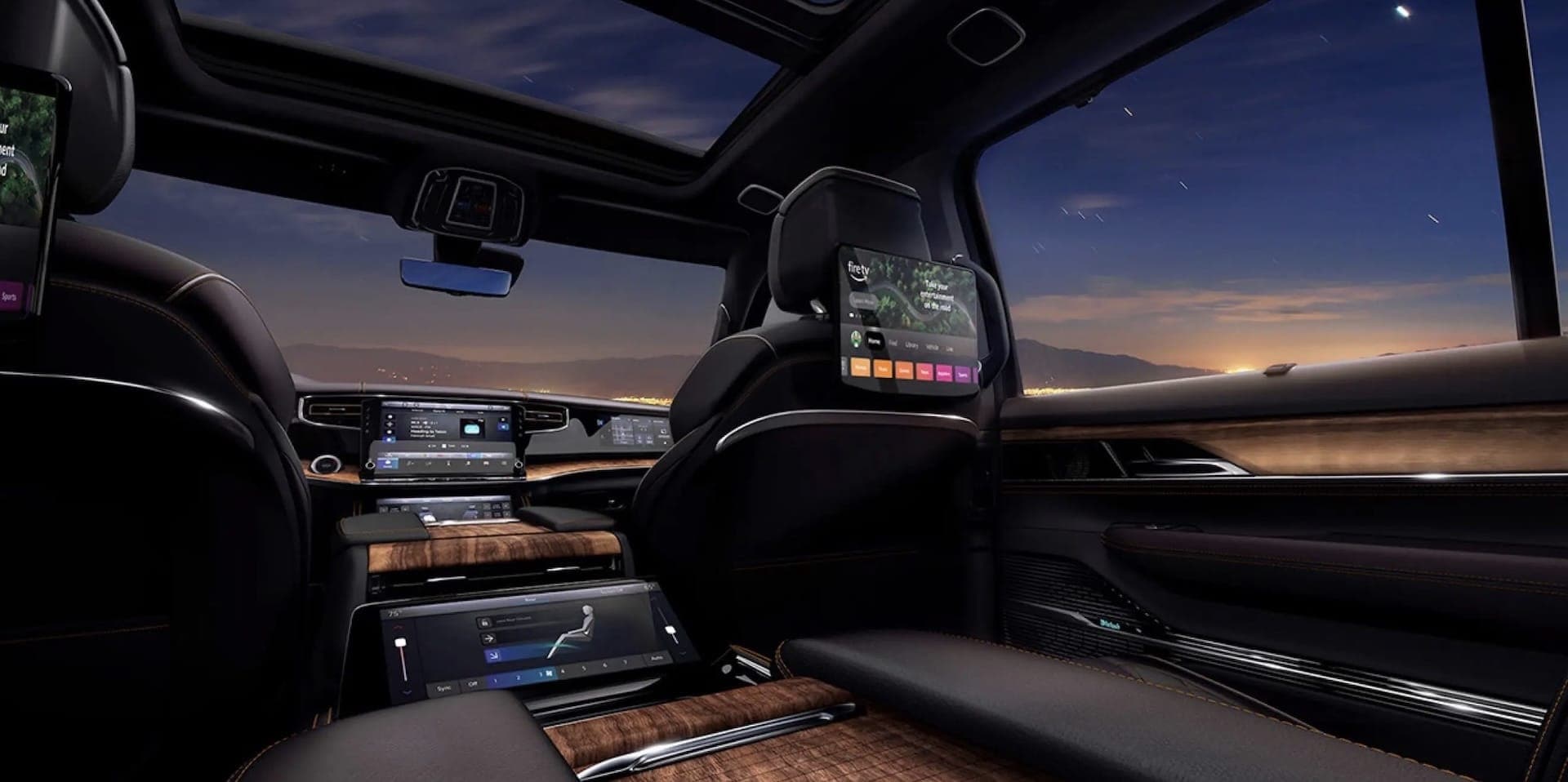
Where the Jeep answers is cabin content rather than automation. A 12-inch Uconnect 5C NAV touchscreen is standard on every configuration, a 10.25-inch Front Passenger Interactive Display is available on Summit, and audio climbs to a 23-speaker McIntosh MX1375 system at the top of the range. Full detail sits on our technology and safety page.
Pricing Compared
| 2026 Jeep Grand Wagoneer | 2026 Chevrolet Suburban |
|---|
| Grand Wagoneer, $63,995 | LS, $63,700 |
| Limited Altitude, $72,060 | LT, $66,700 |
| Upland, $73,060 | RST, $71,700 |
| 85th Anniversary Edition, $75,990 | Z71, $73,700 |
| Limited Reserve, $79,960 | Premier, $78,600 |
| Summit Obsidian, $94,310 | High Country, $83,700 |
| Summit Reserve, $100,310 | — |
Both charge $2,795 for destination, so the entry points are effectively level at $63,995 and $63,700. The two ranges separate above that. Chevrolet's most expensive Suburban is the High Country at $83,700, while the Grand Wagoneer continues past it to $94,310 and $100,310 for the two Summit configurations. If your budget tops out in the low eighties, the Suburban offers its best trim there while the Jeep still has two configurations above.
Where Each One Wins
| Grand Wagoneer wins | Suburban wins |
|---|
| Towing: 10,000 lbs properly equipped on a conventional hitch, 4x4 short wheelbase, against a Suburban maximum of 8,200 lbs on its rear-drive 5.3L V8 | Cargo against the short-wheelbase Jeep: 93.8 cu ft behind the second row against 70.8, and 144.5 maximum against 116.7 |
| 420 hp on 89-octane recommended fuel, matching the 6.2L V8's horsepower without requiring premium | Super Cruise hands-free driving, including hands-free towing support, which Jeep does not offer |
| Gasoline fuel economy: 17/24/19 against 15/20/17 for the 5.3L Suburban in two-wheel drive | Diesel economy: the Duramax returns 21/26/23, well beyond anything the Jeep offers |
| Cargo behind an occupied third row in the L body: 42.6 cu ft against 41.5 | Payload: 1,759 pounds on the 5.3L four-wheel-drive configuration against 1,560 pounds on the four-wheel-drive short wheelbase |
| A range that continues to $100,310 if you want a more expensive cabin than Chevrolet sells | Engine choice, including a torque-rich diesel at 495 lb-ft |
Which One Should You Buy?
Buy the Grand Wagoneer if you tow anything substantial
Two thousand pounds of four-wheel-drive tow capability is the largest single gap on this page. If your trailer is near either vehicle's limit, the Jeep is the answer, and the Suburban's headline figure requires a rear-drive V8 that most buyers here would not choose for a winter of salted roads.
Buy the Suburban if the cargo floor is the point
Against the standard Grand Wagoneer it is simply the bigger vehicle inside. If you routinely move bulky loads with the seats down, 144.5 cubic feet against 116.7 settles it, and no amount of Jeep configuration closes that.
Buy the Suburban if you cover long highway distances
The Duramax diesel at 23 mpg combined and Super Cruise hands-free driving are a strong combination for someone doing serious annual mileage, and neither has a Jeep equivalent.
Consider the Grand Wagoneer L if you need seven seats and their luggage
It is the one configuration where the Jeep out-carries the Suburban in the measurement that matters most to a full family: 42.6 cubic feet behind an occupied third row against 41.5, while retaining the 9,860 lb tow rating on the same four-wheel-drive 3.92-axle basis.
Drive Both Before You Decide
The two things that separate these vehicles are both physical, and on Cape Cod both are settled faster in a parking lot than in a specification table. Put a week of luggage in each with the third row occupied. Then hitch whatever you actually tow to the one you are leaning toward.
We are at 556 Yarmouth Rd in Hyannis. Between a winter of salted roads along Route 6 and a summer of sand near Sandy Neck, the four-wheel-drive question answers itself for most buyers here, and customers drive over from Falmouth and Plymouth to settle it, which is worth remembering when you read that the Suburban's best tow figure belongs to a rear-drive configuration. Call (508) 815-5000 and we will confirm the axle and package content on a specific Grand Wagoneer before you visit, or browse the Grand Wagoneer inventory. If a Cadillac is also on the list, the Escalade comparison covers that matchup.
Grand Wagoneer vs Suburban FAQs
Which tows more, the Grand Wagoneer or the Suburban?
The Grand Wagoneer, by a wide margin. Properly equipped with four-wheel drive and the 3.92 axle on the short wheelbase, it is rated 10,000 lbs on a conventional hitch. The Suburban's maximum is 8,200 lbs, and that figure belongs to the rear-drive 5.3L V8; in four-wheel drive the same engine is rated 8,000 lbs and the 6.2L V8 drops to 7,900 lbs.
Does the Suburban have more room inside?
Against the standard-wheelbase Grand Wagoneer, comfortably yes: 93.8 cubic feet behind the second row against 70.8, and 144.5 maximum against 116.7. Against the Grand Wagoneer L the picture narrows and the one published comparison favors the Jeep, at 42.6 cubic feet behind the third row against 41.5.
Which is better on fuel?
It depends entirely on the engine. Comparing gasoline to gasoline, the Jeep wins at 17 city / 24 highway / 19 combined against 15 / 20 / 17 for the 5.3L Suburban in two-wheel drive. But the Suburban's Duramax diesel returns 21 / 26 / 23, which nothing in the Grand Wagoneer lineup approaches.
Does the Grand Wagoneer offer anything like Super Cruise?
No. Super Cruise permits hands-free driving on compatible roads and supports hands-free towing, and Chevrolet lists it on the LT, RST, Premier and High Country. The Grand Wagoneer's Active Driving Assist is standard on every configuration but Jeep describes it as hands-on-wheel and eyes-on-road, and no Grand Wagoneer offers hands-free operation.
Which has more power?
The Jeep matches the strongest Suburban engine on horsepower and beats it on torque: 420 hp and 468 lb-ft against the 6.2L V8's 420 hp and 460 lb-ft. It also does so on 89-octane recommended fuel, while that 6.2L requires premium. The Suburban's Duramax diesel makes the most torque of any engine here at 495 lb-ft, from 305 hp.
Which costs more to buy?
They start level. The Suburban LS opens at $63,700 and the base Grand Wagoneer at $63,995, and both carry a $2,795 destination charge. The ranges diverge above that: Chevrolet's High Country tops the Suburban range at $83,700, while the Grand Wagoneer continues to $94,310 and $100,310 for the Summit configurations.
Bring the Trailer and the Luggage
Two thousand pounds of tow rating and thirty cubic feet of cargo are the whole argument. Test both against what you actually carry.