Powertrain
2026 Jeep Grand Wagoneer Engine and Performance
420 horsepower and 468 lb-ft, and no engine decision to make. The choices that are still open sit behind the engine: rear or four-wheel drive, one transfer case or two, and an axle ratio worth 3,970 lbs of tow rating on the properly equipped 4x4 short-wheelbase build.
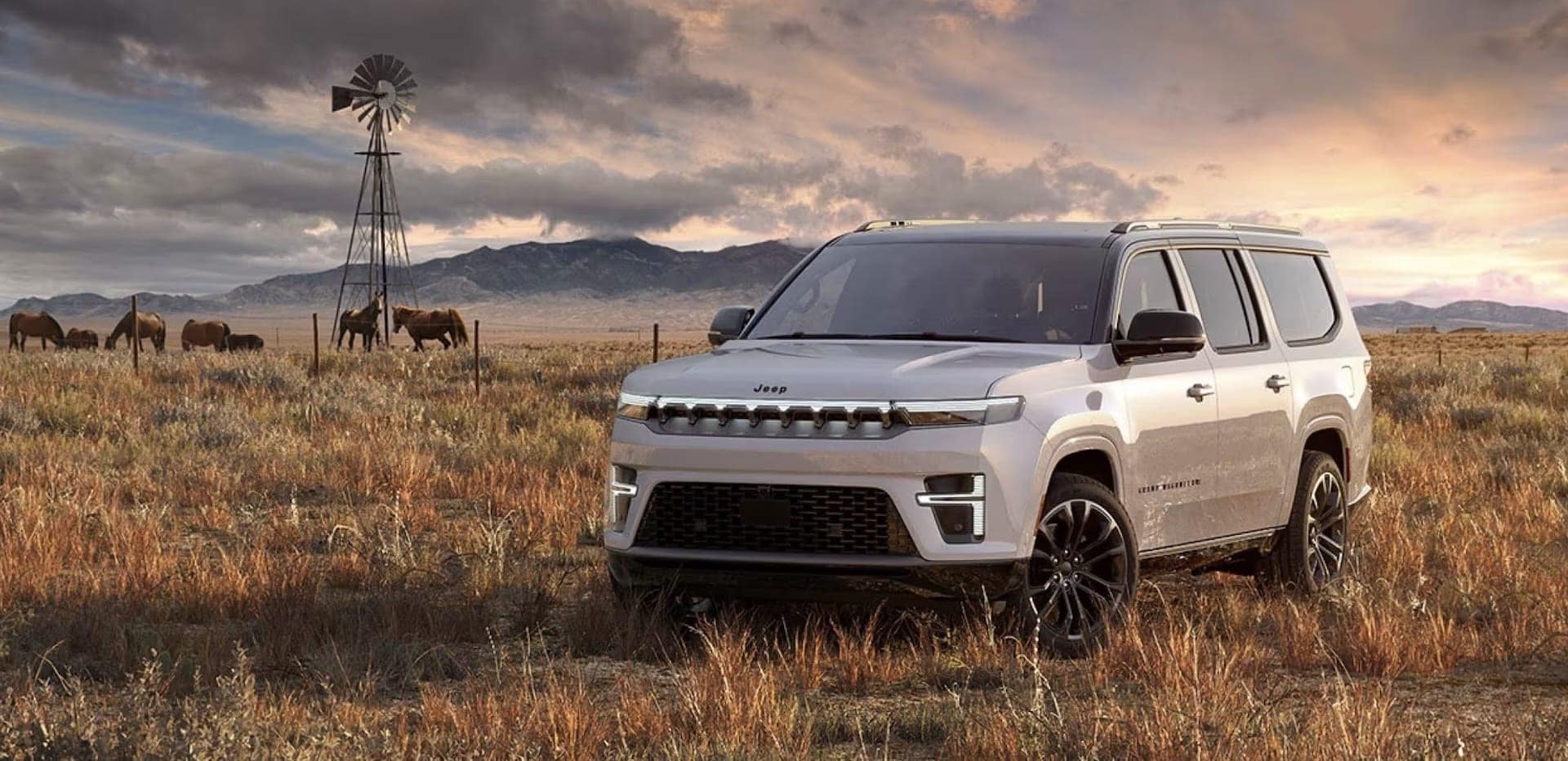
Most engine pages exist to help you choose an engine. This one cannot, because there is exactly one: a 3.0-liter Hurricane twin-turbo inline-six making 420 horsepower at 5,200 rpm and 468 lb-ft at 3,500 rpm, fitted to all seven configurations from the $63,995 car to the $100,310 one. That decision is made before you walk onto the lot.
What is still open is everything bolted behind it, and those choices matter more here than the engine badge would on another vehicle. Rear-wheel or four-wheel drive changes traction and unlocks an option package. One transfer case or two changes what the vehicle will attempt off pavement. And the axle ratio, a line most shoppers never look at, is the difference between a 6,030 lb tow rating and the 10,000 lb figure Jeep advertises. This page covers the engine properly, then spends most of its length on the driveline, because that is where the real decision lives.
2026 Grand Wagoneer Engine Lineup at a Glance
| Powertrain | Output | Availability |
|---|
3.0L Hurricane Twin Turbo, Standard Output
Inline six-cylinder, twin turbocharged, direct injection | 420 hp at 5,200 rpm
468 lb-ft at 3,500 rpm | Standard on every configuration, both wheelbases, rear-wheel and four-wheel drive |
Grand Wagoneer REEV
Range-extended electric: 92-kWh pack, 3.6L V6 driving a 130-kW generator, wheels driven exclusively by electric motors | An estimated 647 hp and 620 lb-ft, Jeep's figures | Announced for later in the model year. Not yet orderable; full specifications still to come |
Everything below concerns the Hurricane, since it is the engine you can actually buy today. The REEV gets its own short section further down, with Jeep's own framing preserved: those outputs are estimates for a vehicle that has not been released, and we will not present them as measured.
Engine-by-Engine Breakdown
3.0L Hurricane Twin Turbo, Standard Output
| Configuration | Inline six-cylinder, twin turbocharged, direct injection, gasoline |
| Displacement | 183 cubic inches, 2,993 cc |
| Bore and stroke | 3.31 in by 3.54 in |
| Compression ratio | 10.4:1 |
| Power | 420 hp at 5,200 rpm |
| Torque | 468 lb-ft at 3,500 rpm |
| Fuel | Mid-grade 89 octane recommended, regular 87 octane acceptable |
Two details in that table deserve more than a row. The first is the torque peak at 3,500 rpm, which is the number that describes how this vehicle behaves rather than how it looks on a spec sheet. A 6,000-pound SUV that makes its maximum pull just above idle-plus does not need to be revved to move, and that shows up as effortlessness on a highway merge with the third row occupied and a trailer behind you, not as drama.
The second is the cylinder arrangement. Six cylinders in a straight line are inherently balanced in a way a V-configuration is not, which is why manufacturers who can package a straight-six generally do. Less vibration reaches the crankshaft, less has to be cancelled out with counterweights and mounts, and the result at a steady 60 mph is a quieter cabin than the displacement would suggest.
On fuel, one correction worth making because third-party listings get it wrong: Jeep recommends mid-grade 89 octane and accepts regular 87. Premium is neither required nor recommended, and every one of the four EPA-certified configurations is rated on regular gasoline. Over a Cape Cod summer of short runs and stop-start bridge traffic, that difference is worth real money against a rival that demands 93.
On acceleration times
We publish no zero-to-sixty figure for this vehicle, and the reason is worth stating rather than hiding. Jeep does not publish one for the 420-horsepower Grand Wagoneer: no acceleration figure is published for it, and no instrumented independent test of the 2026 car was found when this page was researched. The brisk figure circulating in older write-ups belongs to a discontinued 510-horsepower version that is not part of this lineup. Rather than repeat a number attached to a different car, we leave it out. The only 2026 acceleration claim Jeep makes at all is for the REEV, and it is a manufacturer estimate.
Grand Wagoneer REEV, announced for later in the model year
The range-extended electric Grand Wagoneer pairs a 92-kWh battery with a 3.6-liter V6 that drives a 130-kW generator, and the wheels are turned exclusively by electric motors. Note what that arrangement is not: the V6 never turns a wheel. Its only job is generating current. Jeep estimates 647 horsepower and 620 lb-ft, and anticipates total range upwards of 500 miles. Every one of those figures is the manufacturer's own projection for a vehicle that is not yet orderable and has no published specification sheet, which is exactly how we will keep presenting them until it arrives. Tell us if you want to be called when ordering opens.
Transmissions and Drivetrains
Every configuration receives the same gearbox, and the range offers no second choice: a TorqueFlite 8HP75 eight-speed automatic. Inside it are five clutches working across four planetary gear sets, but the specification a driver actually feels is the 8.6 spread between its shortest and tallest ratios.
That span is what lets one transmission do two contradictory jobs. At the bottom it multiplies torque enough to get a heavy trailer rolling from a standstill. At the top it drops engine speed far enough at a cruise to protect the fuel figures further down this page. Narrow the spread and you sacrifice one end or the other.
Below that, three separate decisions, and they compound. Getting the third one wrong is the expensive mistake on this vehicle.
| Decision | Options | What it actually changes |
|---|
| Drivetrain | Rear-wheel drive, labelled 4x2, standard on the base Grand Wagoneer. Four-wheel drive, 4x4, a $3,000 option there and the only offering on Limited Altitude and Summit Obsidian | Traction, and eligibility. The tow package is four-wheel-drive only, so a rear-drive car cannot reach the top rating at any price |
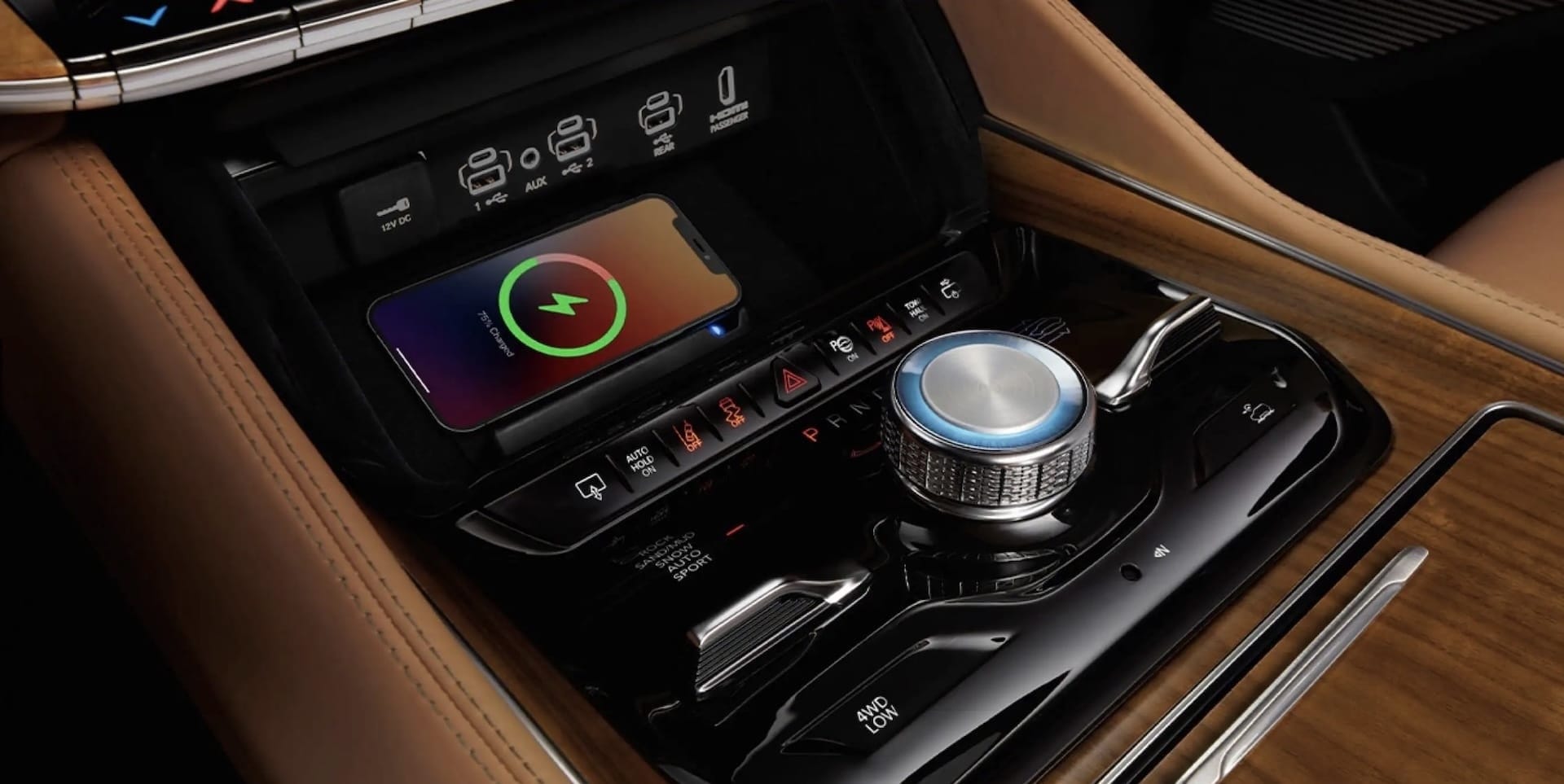
| Transfer case | Single-speed full-time standard, with Auto, Tow, Snow, Mud, Sand and Sport modes and no low range. Two-speed electronically shifted optional, adding Rock mode and a 2.64 low-range ratio | Whether the vehicle has deep gearing for a steep ramp or a soft surface, rather than just traction management |
| Axle ratio | 3.55 standard, 3.92 optional, front and rear | The tow rating, and almost nothing else you will notice. 3.92 arrives inside either the Heavy-duty Trailer Tow package or the Upland package |
The bundling is what catches people out. The 3.92 axle is not a standalone box you tick. It comes inside either of two packages. The Heavy-duty Trailer Tow package costs $1,995, requires four-wheel drive, is optional on every configuration, and also brings the two-speed transfer case, removable front and rear tow hooks, an electronic limited-slip differential, integrated trailer brake control, adjustable roof rail crossbars and blind-spot monitoring with trailer detection. Order that package and the short-wheelbase 4x4 is rated to 10,000 lbs with a conventional hitch, properly equipped. Skip it and the identical vehicle is rated 6,030 lbs.
Differentials round it out: an open front unit on an 8.5-inch ring gear, and a rear limited-slip on a 10.2-inch ring gear as standard, with the electronic limited-slip differential arriving in that same tow package.
Side-by-Side Powertrain Matrix
| Build | Axle | Maximum trailer weight | EPA combined |
|---|
| Grand Wagoneer 4x2 | 3.55 | 6,210 lbs | 19 MPG |
| Grand Wagoneer 4x4 | 3.55 | 6,030 lbs | 19 MPG |
| Grand Wagoneer 4x4 | 3.92 | 10,000 lbs, conventional hitch, properly equipped | 19 MPG |
| Grand Wagoneer L 4x2 | 3.55 | 5,960 lbs | 19 MPG |
| Grand Wagoneer L 4x4 | 3.55 | 5,770 lbs | 18 MPG |
| Grand Wagoneer L 4x4 | 3.92 | 9,860 lbs | 18 MPG |
Read the third row against the second. Same body, same drivetrain, same engine, a different final drive, and the rating nearly doubles. No other option on this vehicle produces a change of that size.
Fuel Economy by Configuration
The EPA certified four separate configurations, and they do not all return the same figures. Quoting a single number for the lineup would be off by up to two miles per gallon depending on which one you are standing next to.
| Configuration | City | Highway | Combined | Fuel tank |
|---|
| Grand Wagoneer 4x2 | 17 MPG | 24 MPG | 19 MPG | 26.5 gal |
| Grand Wagoneer L 4x2 | 17 MPG | 24 MPG | 19 MPG | 30.5 gal |
| Grand Wagoneer 4x4 | 17 MPG | 23 MPG | 19 MPG | 26.5 gal |
| Grand Wagoneer L 4x4 | 16 MPG | 22 MPG | 18 MPG | 30.5 gal |
Ratings are published at fueleconomy.gov, which is the source of record for this model because Jeep issued no EPA figures of its own at launch. All four certify on regular gasoline.
The line worth noticing is the second one. In rear-wheel drive, the long-wheelbase L returns identical figures to the short car, so the bigger body costs nothing at the pump in that configuration. Only when you combine the long body with four-wheel drive does anything come off, and then it is a single point in each measure. Against that, the L carries four extra gallons of tank, which on a run down to Green Pond and back matters more than the rating difference does.
Which Grand Wagoneer Powertrain Is Right for You?
One engine means the question becomes which driveline to put behind it. Four builds cover almost everyone.
Rear-wheel drive, 3.55 axle
The $63,995 entry point, and a sensible choice for a garaged vehicle that stays on pavement, carries people rather than trailers, and spends winter on good tires. It gives up nothing in power or seating. It gives up the tow package permanently, and traction on an unplowed morning.
Four-wheel drive, 3.55 axle
The volume build, and the right answer for most households here. Full-time four-wheel drive with mode selection handles a sandy lot at Kalmus Beach and a nor'easter equally well, and it costs $3,000 over the rear-drive car. Rated at 6,030 lbs, which covers a small boat or a pair of jet skis but not a serious trailer.
Four-wheel drive, 3.92 axle, Heavy-duty Trailer Tow
The tow build, and the only one rated to 10,000 lbs with a conventional hitch on the short wheelbase, properly equipped. Order it if a trailer is in your life more than twice a year, and order it at build time rather than hoping to find one: the axle cannot be retrofitted at a service counter. This is the configuration we would put anyone launching regularly at Falmouth Inner Harbor into.
Four-wheel drive with the two-speed transfer case
Arrives inside the same tow package, and adds Rock mode and a 2.64 low-range ratio. If your reason for buying a Jeep involves a soft ramp, a rutted approach or a beach permit, low range is the thing that keeps a heavy vehicle composed at walking pace. Pair it with the Upland package's skid plates and all-terrain tires and the vehicle arrives properly equipped for that job.
The expensive misunderstanding: a shopper assumes four-wheel drive is what delivers the advertised tow figure. It is not. Four-wheel drive on the standard 3.55 final drive tops out at 6,030 lbs, and there is no path from there to 10,000 lbs after the vehicle is built, because final drive is set on the assembly line rather than at a service bay. Tell us what you plan to pull and we will read the axle off any unit on our lot before you drive over.
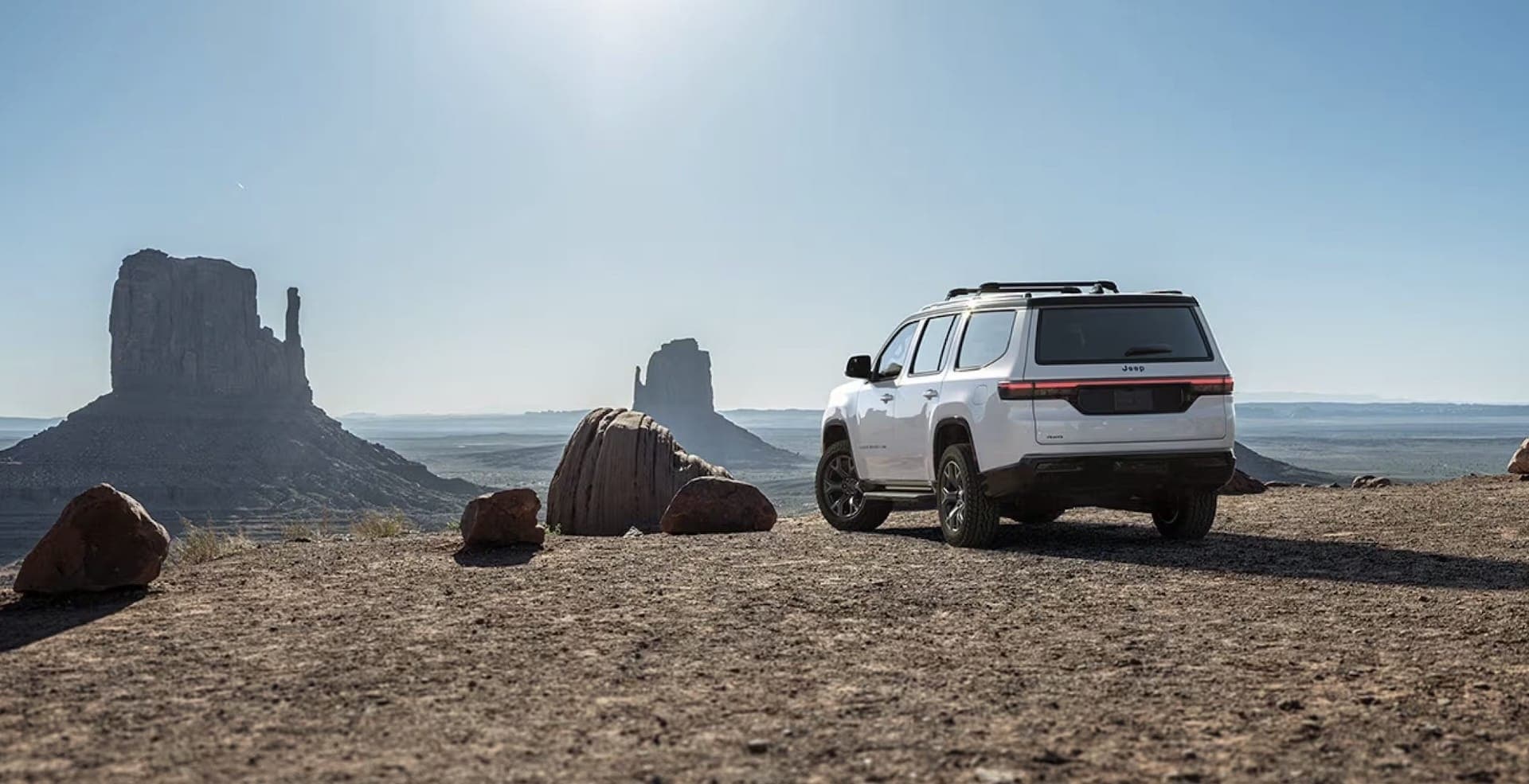
Shop the Grand Wagoneer at Premier Cape Cod
Premier Cape Cod Chrysler Dodge Jeep Ram is at 556 Yarmouth Rd in Hyannis. Because the differences that matter on this vehicle sit underneath it rather than in the trim name, call us at (508) 815-5000 before you make the trip and we will read you the axle ratio, transfer case and package content on any specific unit. That is a two-minute conversation that saves a wasted drive from Marion or the South Shore.
Salt is the local variable that does not appear in any specification. It arrives on the road through winter and off the water year-round, and a full-time four-wheel-drive system that apportions torque without being asked is worth more here than a part-time system a driver has to remember to engage. Whichever driveline you land on, the maintenance schedule page covers what the undercarriage needs and what the warranty actually pays for.
See what is in stock on our Grand Wagoneer inventory page, compare configurations on the trims page, or read the tow ratings load by load on the towing capacity page.
Grand Wagoneer Engine FAQs
Does the axle ratio change how the Grand Wagoneer drives day to day?
Barely. The 3.92 final drive exists to raise the tow rating, and in normal driving the eight-speed automatic's 8.6 ratio spread absorbs most of the difference. EPA combined figures are unchanged between the two axles on the same body and drivetrain. Choose the axle for what you intend to pull, not for how it will feel on the commute.
Can I add the two-speed transfer case on its own?
No. It arrives as part of the Heavy-duty Trailer Tow package, alongside the 3.92 axle, the electronic limited-slip differential, integrated trailer brake control and the trailer monitoring equipment. The package requires four-wheel drive and is optional across the lineup, so the practical route to low range is to order that package.
Does four-wheel drive cost fuel economy?
Less than most people expect. On the short wheelbase, rear-wheel drive rates 17 city / 24 highway / 19 combined and four-wheel drive rates 17 / 23 / 19, so only the highway figure moves. The larger step comes from combining four-wheel drive with the long body, which rates 16 / 22 / 18.
What is the 8.6 ratio spread for?
It is the gap between the shortest and tallest gear in the eight-speed automatic. A wide spread lets first gear multiply torque enough to move a loaded trailer from rest, while eighth keeps engine speed low at a cruise. That combination is why one gearbox can serve a 10,000 lb tow rating, on a conventional hitch on the properly equipped 4x4 short-wheelbase build, and a 24 MPG highway figure without compromising either.
Does the long wheelbase change performance?
Not the engine's output, which is identical. What changes is mass and gearing demand: the Grand Wagoneer L weighs more at every equivalent configuration, its four-wheel-drive EPA figures drop by one point in each measure, and its maximum tow rating is 9,860 lbs on a conventional hitch with four-wheel drive and the 3.92 axle, properly equipped, against 10,000 lbs for the short-wheelbase car on that same configuration.
Is the Hurricane a replacement for a V8?
In the practical sense, yes. For 2026 there is no V8 anywhere in the Grand Wagoneer lineup, and the twin-turbocharged straight-six covers the job with 420 horsepower and 468 lb-ft while carrying a 10,000 lb maximum tow rating on the properly equipped 4x4 short-wheelbase build. The trade a buyer notices is character rather than capability: turbocharged torque low in the range instead of a V8's noise.
When can I order the Grand Wagoneer REEV?
Jeep has announced it for later in the model year and has not opened ordering, and full specifications are still to come. Its stated 647 horsepower, 620 lb-ft and total range upwards of 500 miles are manufacturer estimates for an unreleased vehicle. Call us and we will add you to the list for the moment it becomes orderable.
Feel the Torque Peak, Not the Spec Sheet
A torque peak low in the rev range is difficult to appreciate from a table. Merging onto a highway with three rows full is where it explains itself. Come drive one.