Towing
2026 Jeep Grand Wagoneer Towing Capacity
Up to 10,000 lbs with a conventional hitch on the 4x4 short-wheelbase build, properly equipped. But a tow is limited by four separate ceilings, and the 10,000 lb one is usually the last to bite.
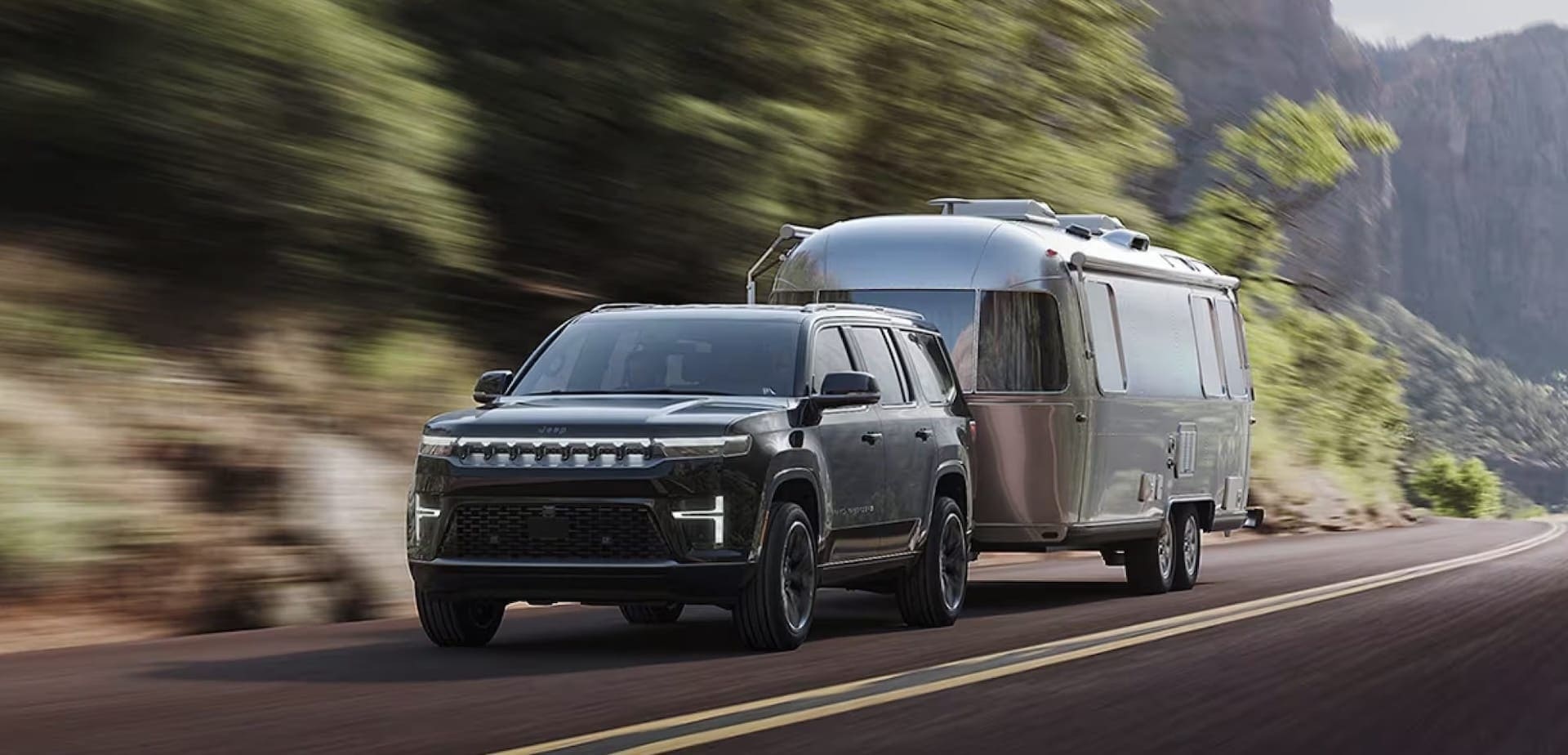
Shoppers arrive at a towing page looking for one number. The 2026 Grand Wagoneer's is 10,000 lbs with a conventional hitch on the 4x4 short-wheelbase build, properly equipped, and it is a genuine figure. It is also the ceiling you are least likely to meet, because three other limits sit below it and one of them usually binds first.
Those four ceilings are maximum trailer weight, gross combined weight rating, tongue weight and payload. A trailer that sits comfortably inside the first can still put you over the last, because tongue weight and passengers draw on the same payload allowance, which runs between 1,415 and 1,625 pounds depending on how the vehicle is built. This page runs through all four in the order they actually catch people out, then covers the package that raises the headline figure, the equipment that makes a tow tolerable, and what any of it means at a ramp in July.
Maximum Towing Capacity by Configuration
Every figure below is properly equipped on a conventional hitch. The variable that moves them is the final drive ratio, not the trim badge or the price.
| Body | Drivetrain | Axle | Maximum trailer weight |
|---|
| Grand Wagoneer | 4x4 | 3.92 | 10,000 lbs |
| Grand Wagoneer L | 4x4 | 3.92 | 9,860 lbs |
| Grand Wagoneer | 4x2 | 3.55 | 6,210 lbs |
| Grand Wagoneer | 4x4 | 3.55 | 6,030 lbs |
| Grand Wagoneer L | 4x2 | 3.55 | 5,960 lbs |
| Grand Wagoneer L | 4x4 | 3.55 | 5,770 lbs |
Three readings of that table. Rows one and four are the same vehicle: identical body, identical drivetrain, identical engine, and a 3,970 lb difference produced entirely by the final drive. Rows three and four show rear-wheel drive out-towing four-wheel drive, 6,210 lbs against 6,030 lbs, both on the short wheelbase with the 3.55 axle and a conventional hitch, properly equipped. Four-wheel-drive hardware adds mass to the vehicle, and that mass comes out of the trailer allowance. And on the 3.92 axle with four-wheel drive and a conventional hitch, properly equipped, the long body gives up 140 lbs to the short one.
Gross combined weight rating sits above all of it at 15,000 pounds, or 16,500 pounds in Max Tow form, properly equipped on the 4x4 3.92-axle build in either wheelbase. That is the total of vehicle, passengers, cargo and trailer together, and it is the ceiling that a heavily loaded vehicle reaches before the trailer rating does.
Payload, Tongue Weight, and Why They Bind First
Payload varies by configuration, from 1,415 pounds to 1,625 pounds, and it does not track price: a base four-wheel-drive Grand Wagoneer carries more than a Grand Wagoneer L, and the Summit carries the most of all. It covers driver, passengers, cargo, options and trailer tongue weight together, and that last inclusion is what catches people.
| Configuration | Maximum payload |
|---|
| Grand Wagoneer 2WD | 1,570 pounds |
| Grand Wagoneer 4x4 | 1,560 pounds |
| Limited 4x4 | 1,596 pounds |
| Summit 4x4 | 1,625 pounds |
| Grand Wagoneer L 2WD | 1,420 pounds |
| Grand Wagoneer L 4x4 | 1,515 pounds |
| Limited L 4x4 | 1,415 pounds |
| Summit L 4x4 | 1,506 pounds |
Tongue weight and gross combined rating sit alongside it:
| Limit | Grand Wagoneer | Grand Wagoneer L |
|---|
| Maximum tongue weight, 3.92 axle | 820 pounds | 793 pounds |
| Maximum tongue weight with Max Tow | 981 pounds | 945 pounds |
| Gross combined weight rating | 15,000 pounds, or 16,500 pounds with Max Tow, on the properly equipped 4x4 3.92-axle build |
Here is the proportion that matters. A conventional trailer typically carries ten to fifteen percent of its weight on the tongue. Run that against a payload of 1,560 pounds on a four-wheel-drive short wheelbase and a mid-size trailer consumes a large share of it before a single person climbs in. Two adults and a cooler still fit. Seven people and their luggage do not.
This is why we ask what you are towing and who is coming. A family of six heading off for a week with a mid-size trailer is a payload problem long before it is a tow-rating problem, and the honest answer in that case is a lighter trailer rather than a more expensive Grand Wagoneer. Cargo volumes and how they interact with weight are on the cargo and third row page.
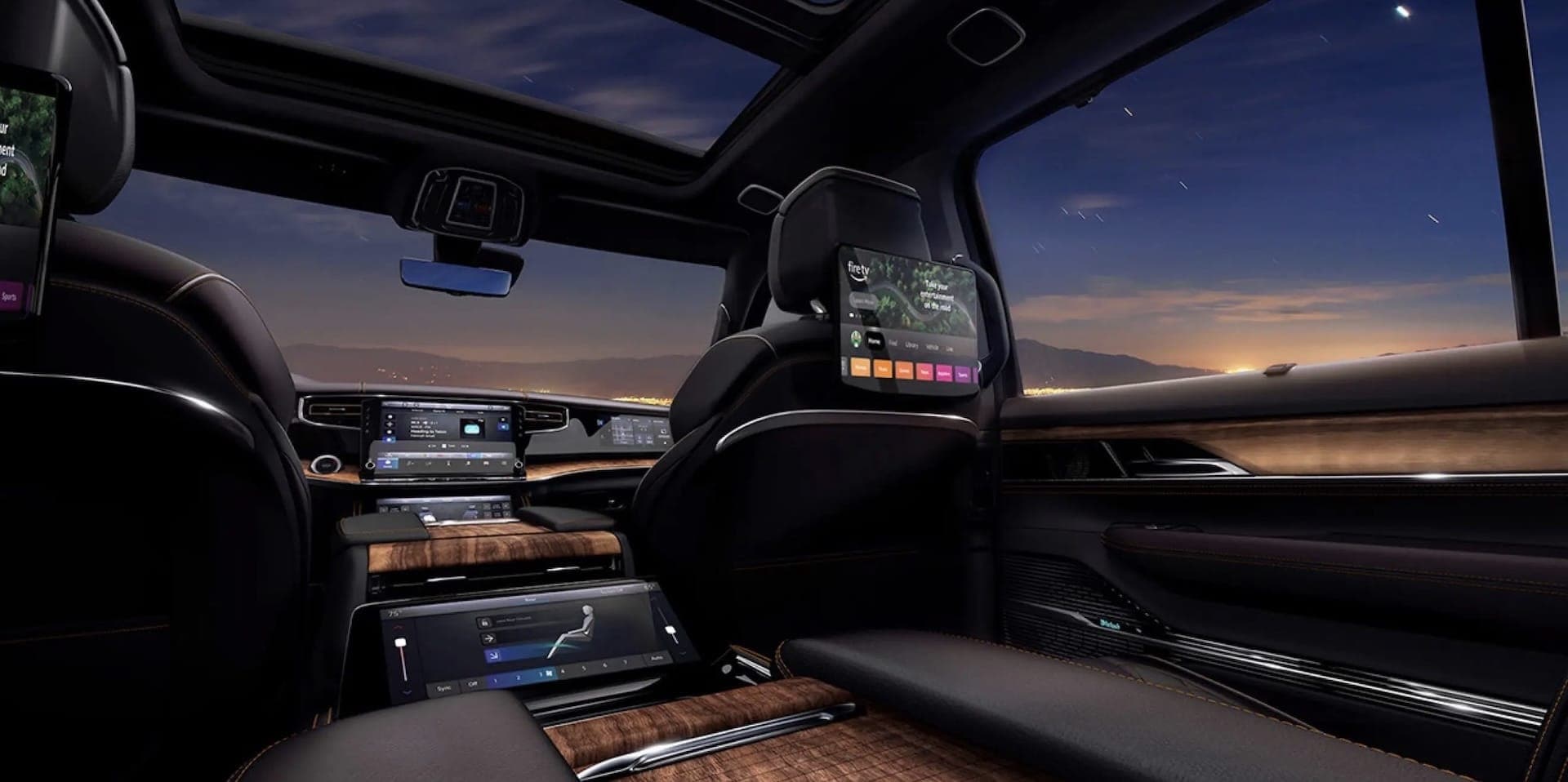
The Heavy-duty Trailer Tow Package
The Heavy-duty Trailer Tow package costs $1,995, requires four-wheel drive and is optional on every configuration from the base car to the Summit Reserve. It is one of two routes to the 3.92 axle; the Upland package bundles the same hardware, and the two are compared below. Its contents:
| Driveline | 3.92 final drive ratio · two-speed transfer case · electronic limited-slip differential · speed control for descents |
| Hitch and control | Integrated trailer brake control · removable front and rear tow hooks |
| Monitoring | Trailer hitch zoom · trailer light monitoring · trailer tire pressure monitoring · Blind-spot Monitoring with Trailer Tow Detection |
| Other | Adjustable roof rail crossbars · all-season tires |
The single most important thing to understand about that list is that it is ordered, not fitted. The 3.92 axle is installed when the vehicle is built, so a Grand Wagoneer that left the factory on the 3.55 cannot be upgraded into a 10,000 lb tow vehicle afterwards at any price. If towing is why you are buying, this decision happens once.
Upland is the second route, and it is the more expensive one. The Upland package at $6,065 bundles the 3.92 final drive alongside Quadra-Lift air suspension, an active two-speed transfer case, a limited-slip differential, Selec-Speed Control, trailer light monitoring and the fuel tank, transfer case and front-axle skid plates. It reaches the same 10,000 lb rating. But the cheapest route to that rating is a base four-wheel-drive Grand Wagoneer at $66,995 plus the $1,995 tow package, which is $68,990 all in; an Upland at $73,060 sits $4,070 above it. Buy Upland for the air suspension and the underbody armour, not because it is the cheap way to tow.
Two requirements from Jeep's own guidance travel with any trailer, package or not. Trailer brakes are recommended above 1,000 pounds and required above 2,000 pounds. A weight-distributing hitch is recommended once gross trailer weight reaches 5,000 pounds, which covers most of what this vehicle is bought to pull. The Trailer Tow Package may include a four-pin and seven-pin wiring harness.
Trailering Equipment and Technology
Rating aside, what makes towing a full-size SUV tolerable is the equipment that removes guesswork. Trailer hitch zoom magnifies the rear camera view as you reverse onto the ball, which converts a two-person job into a one-person one. Trailer light monitoring and trailer tire pressure monitoring both report to the 12-inch Uconnect 5C NAV screen, so a failed lamp or a soft trailer tire shows up on the dashboard rather than in a stranger's headlights behind you.
Blind-spot monitoring extends its detection zone to account for trailer length, which matters on a highway lane change with something long behind you. Integrated trailer brake control lets you set gain from the cabin and blend trailer braking with the vehicle's own instead of relying on an aftermarket controller screwed under the dash.
The drive modes carry over from the standard vehicle and one is built for this: the full-time four-wheel-drive transfer case includes a Tow setting alongside Auto, Snow, Mud, Sand and Sport. Where the two-speed transfer case is fitted, its 2.64 low-range ratio is what lets you ease a heavy trailer up a wet ramp at walking pace rather than slipping a clutch pack to do it.
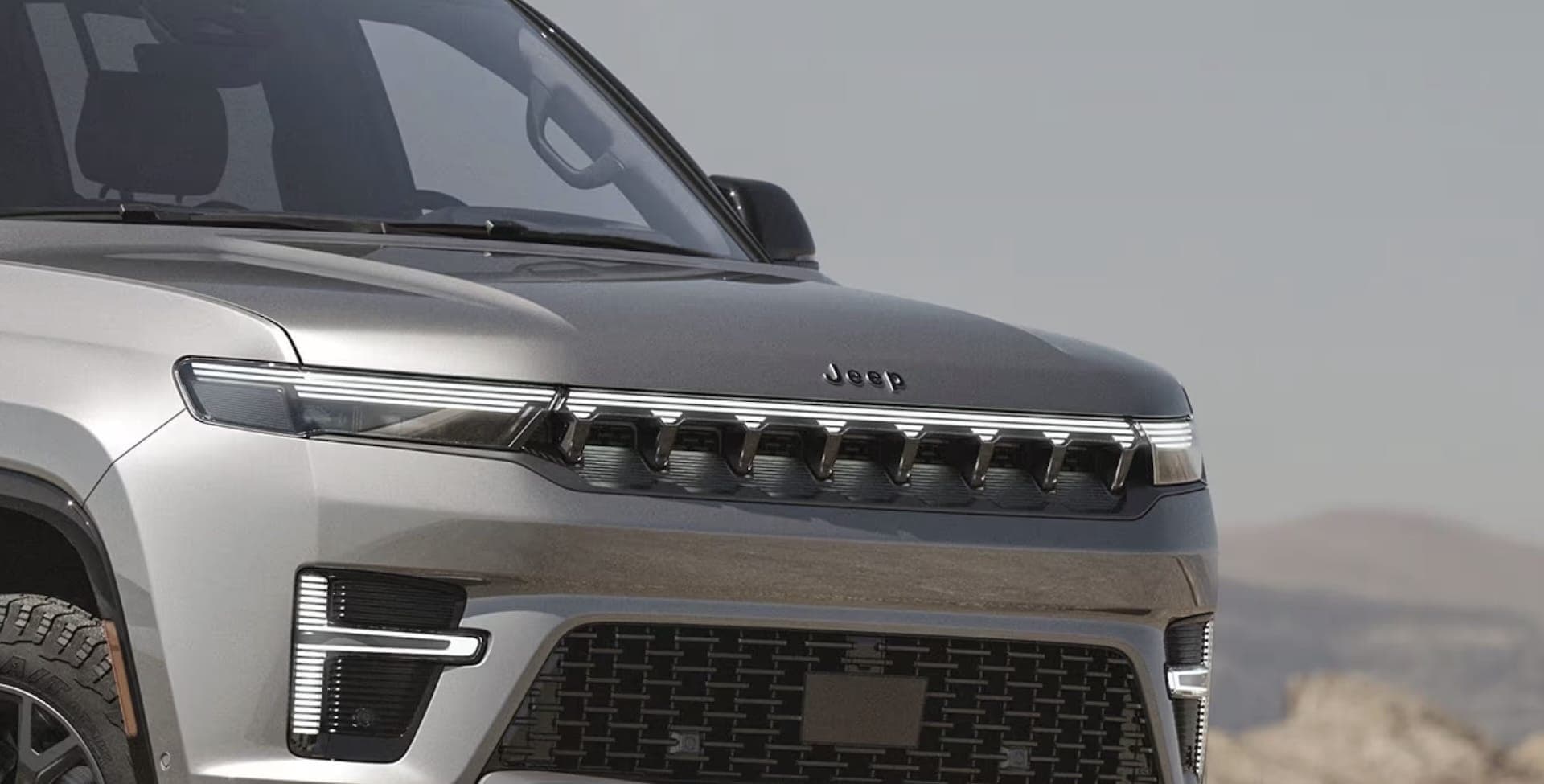
What the Grand Wagoneer Can Actually Tow
We are not going to publish a table of boat and camper weights, because trailer weights vary so widely by model, options and how they are loaded that a published range would mislead more often than it helped. What we will tell you is how to check, and which build to buy.
Weigh your rig loaded, not dry. A trailer's advertised dry weight excludes water, fuel, batteries, gear and whatever accumulated in it last season. The gap between dry and loaded is routinely several hundred pounds and sometimes more than a thousand. A public scale gives you the real number in ten minutes, and it is the only number worth planning around.
Then check it against three ceilings, not one. Loaded trailer weight against the rating for your axle. Tongue weight, roughly ten to fifteen percent of that, against what is left of your payload after passengers and cargo. Use your own configuration's figure from the table above, not a lineup average. And the whole assembly against the 15,000 pound gross combined rating, or 16,500 with Max Tow.
| If towing is the reason you are buying | What to do |
|---|
| The build to shop | Short-wheelbase Grand Wagoneer, four-wheel drive, Heavy-duty Trailer Tow package, $68,990 all in. Rated 10,000 lbs on a conventional hitch, properly equipped, and the cheapest configuration that reaches it. Upland reaches the same rating for $4,070 more |
| The build to avoid | Any 3.55-axle configuration, at any price. A $94,310 Summit Obsidian without the package is rated 6,030 lbs, which is less than a $63,995 rear-drive car |
| If you also carry people | Run the payload arithmetic before the tow arithmetic. Tongue weight plus occupants is where a big family tow actually stops |
| If you need the cargo too | The Grand Wagoneer L trades 140 lbs of trailer rating for 42.6 cu ft behind the third row. Usually the right trade for a family, rarely the right one for a heavy tow |
Towing on Cape Cod
Most towing that starts at our door ends at a Cape Cod ramp, and the local pattern is short distances in awkward conditions rather than long hauls. Bass River and Sesuit Harbor are typical: fifteen minutes of driving, then the part that actually tests the vehicle. A run to a Cape Cod ramp is rarely more than half an hour, but it ends on a wet concrete slope with a queue behind you, and that is where low-range gearing and integrated brake control stop being specification lines. Drivers coming down from Plymouth Harbor and the South Shore add bridge traffic to the same trip, which is its own argument for a vehicle that manages trailer sway without being asked.
Two seasonal realities worth planning for. Salt gets onto trailer wiring, connectors and the hitch itself, and a corroded seven-pin plug is the most common towing failure we see in spring, so rinse the connector along with the vehicle. And summer traffic means long periods stationary with a loaded trailer in high heat, which is exactly the condition the Tow drive mode and the transmission's wide ratio spread exist to manage.
Whatever you are pulling, call us at (508) 815-5000 with the trailer's loaded weight before you shop. We will tell you which axle you need and check what is on the ground, because the difference between a 6,030 lb Grand Wagoneer and a 10,000 lb one cannot be seen from the outside. We are at 556 Yarmouth Rd in Hyannis, and buyers make the drive from as far as Raynham for a build we have already verified.
Towing FAQs
Which limit stops most Grand Wagoneer tows first?
Payload, not the tow rating. It runs from 1,415 to 1,625 pounds depending on configuration, and it includes trailer tongue weight alongside every person and bag in the vehicle. A conventional trailer typically rests ten to fifteen percent of its weight on the hitch, so a mid-size rig claims a large share of that allowance before anyone gets in. Check your own configuration's figure against that proportion before you check the trailer rating.
What exactly do I need for the 10,000 lb rating?
All three of these at once, and the rating collapses if any is missing: the 123-inch body rather than the L, four-wheel drive rather than rear, and the 3.92 final drive, which reaches you either through the Heavy-duty Trailer Tow package or through the Upland package. Build the identical vehicle on the standard 3.55 and it is rated 6,030 lbs.
Why does the rear-drive model out-tow four-wheel drive?
On the standard 3.55 axle it does, 6,210 lbs against 6,030. Four-wheel-drive hardware adds weight to the vehicle, and that weight comes out of the trailer allowance. The picture reverses entirely with the 3.92 axle, which is four-wheel-drive only and takes the short-wheelbase car to 10,000 lbs.
What is the tongue weight limit?
On the 3.92 axle, 820 pounds on the short wheelbase and 793 pounds on the Grand Wagoneer L. With Max Tow those rise to 981 and 945 pounds. Gross combined weight rating is 15,000 pounds, or 16,500 pounds with Max Tow, on the properly equipped 4x4 3.92-axle build.
Do I need trailer brakes and a weight-distributing hitch?
Probably both, depending on the rig. Jeep's threshold for a weight-distributing hitch is a gross trailer weight of 5,000 pounds, which most things this vehicle gets bought to pull will exceed. On brakes, the guidance is a recommendation above 1,000 pounds that becomes a requirement above 2,000. Order the Heavy-duty Trailer Tow package and the brake controller is already integrated, so there is nothing to add under the dash.
Can I add the tow package to a Grand Wagoneer I already own?
Not the part that matters. A hitch can be fitted afterwards, but the 3.92 final drive is installed during assembly and determines the rating. A vehicle built on the 3.55 axle stays a 6,030 lb tow vehicle for its life, which is why we check the axle on any unit before a towing customer drives over.
Does the Grand Wagoneer L tow less than the standard body?
Slightly. On the same four-wheel drive and 3.92 axle, the L is rated 9,860 lbs against 10,000 lbs for the short wheelbase, a difference of 140 lbs. On the standard 3.55 axle the L rates 5,770 lbs in four-wheel drive. For most trailers the gap is immaterial; for a rig near the ceiling it is the deciding detail.
Tell Us the Trailer, We Will Check the Axle
A 6,030 lb Grand Wagoneer and a 10,000 lb one look identical on the lot. Give us the loaded weight and we will confirm the build before you make the trip.